Retailers cannot sell products that never arrive, and distributors cannot move inventory that warehouses fail to ship on time. B2B fulfillment is what keeps those relationships running smoothly. The process covers everything from how businesses store inventory to how they process orders and deliver products to retailers, distributors, and other partners. Without a clear understanding of how B2B fulfillment works, delays increase, inventory accuracy slips, and wholesale orders can stall before they ever reach the shelf.
Key Takeaways
- B2B fulfillment refers to the process businesses use to store products, process wholesale orders, and ship goods to other companies rather than individual consumers.
- The typical process for B2B fulfillment includes receiving inventory, processing orders, picking and packing products, shipping orders, and handling returns.
- Retailers and business buyers depend on reliable fulfillment to keep shelves stocked and operations running smoothly.
- Technology and integrated systems help businesses manage inventory, track orders, and coordinate shipments more efficiently.
What Is B2B Fulfillment?
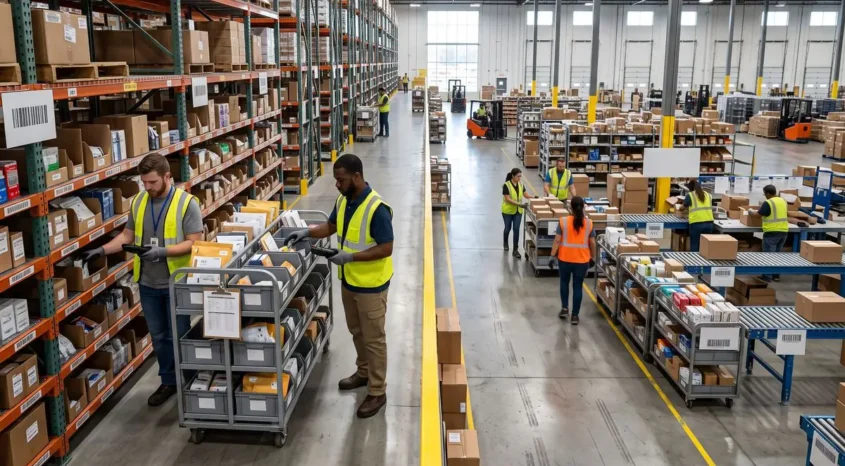
Business-to-business (B2B) fulfillment is the process used to store inventory, prepare bulk orders, and ship products to other businesses rather than individual consumers. A retailer may place a large purchase order, a distributor may request pallet quantities, or a manufacturer may supply goods to another company. Each order moves through a fulfillment center where teams receive inventory, track stock levels, pick and pack shipments, and coordinate delivery to retail stores and other businesses across the supply chain.
Some companies manage these operations internally, while others rely on a fulfillment partner or a third-party logistics provider to handle fulfillment services. These providers operate warehouses, manage inventory, and coordinate shipping methods designed for large commercial shipments. When the process runs smoothly, products move efficiently through the supply chain and arrive at retail stores and partner businesses ready for sale.
B2B Fulfillment vs B2C Fulfillment
B2B fulfillment and business-to-consumer (B2C) fulfillment serve different types of buyers. B2C describes the process that ships products directly to individual customers who place orders online. An ecommerce business might send a few items from a fulfillment center straight to a shopper’s home, usually through parcel carriers and standard delivery services.
B2B fulfillment operates on a larger scale, focusing on retail distribution rather than individual purchases. Businesses place orders in bulk quantities that move across supply chain logistics networks before reaching department stores, big-box retailers, and other brick and mortar stores. Fulfillment operations must coordinate inventory, freight scheduling, and shipping bulk orders so products arrive at retail locations ready to stock and sell.
Why B2B Fulfillment Matters for Growing Businesses
B2B fulfillment influences how retailers perceive your brand, how smoothly operations run, and how easily a business can scale into wholesale channels. When fulfillment runs well, partners gain confidence in the relationship. When it fails, delays and stock issues quickly create friction across the supply chain.
Reliability Builds Trust with Retail Partners
Retailers rely on consistent deliveries to keep shelves stocked and customers happy. Accurate shipments and dependable delivery schedules help retail partners plan inventory and promotions with confidence. High fulfillment accuracy strengthens those relationships and often leads to repeat business as partners learn they can rely on your operation.
Smooth Operations Support Business Growth
Wholesale success requires efficient management behind the scenes. As order volume increases, fulfillment systems must be able to handle larger shipments, increased amounts of products, and more locations. Businesses that maintain organized operations can scale faster and support long-term business growth without disrupting daily workflows.
The B2B Fulfillment Experience Shapes How Customers See Your Brand
Retail buyers and distributors judge suppliers based on reliability as much as product quality. Late shipments, incorrect orders, or poor communication quickly damage the customer experience. Consistent fulfillment performance keeps orders flowing and helps maintain strong relationships across the supply chain.
Strong Fulfillment Becomes a Competitive Advantage
Many companies offer similar products, but not every business delivers them with the same reliability. Companies with dependable fulfillment systems gain a competitive advantage because partners trust them to deliver on time and in the right quantities. Over time, that reliability helps attract new retail partners and strengthens long-term business relationships.
How the B2B Fulfillment Process Works
A successful B2B fulfillment operation does not happen in a single step. Products move through a series of coordinated actions that take inventory from storage to a retail shelf. B2B fulfillment connects inventory management, warehouse activity, and freight shipping into one end-to-end process. When each stage works together, companies can rely on that coordination to support reliable fulfillment, maintain accurate inventory levels, and keep bulk shipments moving through daily business operations.
1. Receiving and Storing Inventory
B2B fulfillment begins when products arrive at a warehouse or fulfillment center. The warehouse team unloads incoming shipments, inspects the goods, and records them in the inventory management system. Staff members place items into organized inventory storage locations, making it easier to track inventory levels and locate products quickly.
2. Order Processing
Retailers, distributors, and other business buyers submit purchase orders through procurement systems or sales platforms. The warehouse team reviews the order details, confirms available inventory levels, and schedules the request for order fulfillment. Clear records and organized workflows help fulfillment operations move efficiently and reduce the risk of errors.
3. Picking and Packing
Once the order moves forward, the warehouse team locates the requested items and prepares them for shipment. Staff members pick products from storage, assemble the required quantities, and pack goods according to retailer or partner requirements. This step prepares bulk shipments for the next stage of the fulfillment process.
4. Shipping and Delivery
Logistics teams then arrange freight coordination and select the most efficient shipping method for the order. Many B2B orders travel on pallets or in large cartons designed for transport to distribution centers, retail locations, or partner facilities. Reliable fulfillment depends on careful scheduling and accurate documentation so shipments arrive on time.
5. Returns and Restocking
Returns occasionally occur in B2B operations due to damage, incorrect quantities, or order adjustments. Warehouse teams inspect returned products, document the issue, and determine whether items can be returned to inventory storage or require removal from stock.
Common Types of B2B Fulfillment
Not every business handles order fulfillment the same way. The way products move through warehouses often depends on how a company sells, who its buyers are, and where those products ultimately go. Some brands ship large orders to retailers, while others distribute products through online channels or specialized partners. Understanding the different types of fulfillment helps businesses select the approach that will maintain strong fulfillment performance as demand grows.
Wholesale and Retail Fulfillment
Many B2B operations focus on retail fulfillment. Brands ship large orders to department stores, big-box retailers, and independent shops that then sell the products to consumers. In this model, order fulfillment teams prepare shipments in bulk quantities and follow strict packaging, labeling, and delivery requirements that retail partners expect.
Distributor Fulfillment
Some businesses move products through distributors rather than shipping directly to stores. Distributors purchase inventory in large quantities and supply those goods to a network of retailers or commercial buyers. Order fulfillment teams must prepare larger shipments and coordinate transportation to keep inventory moving through the distribution channel.
Ecommerce Fulfillment for Wholesale Orders
Many companies now combine ecommerce fulfillment with traditional B2B sales. Retail buyers place wholesale orders through online portals, and fulfillment teams process those requests through the same warehouse systems used for consumer orders. This approach enables businesses streamline order fulfillment while also providing buyers with a faster way to place and track orders.
Third-party Fulfillment Providers
Some companies outsource operations to a fulfillment provider that manages warehousing, shipping, and order fulfillment on their behalf. These providers operate large fulfillment networks and handle logistics for multiple brands at once. Businesses often turn to this option when they want to improve fulfillment performance without expanding their own warehouse footprint.
Challenges in B2B Fulfillment
B2B fulfillment creates valuable opportunities for growth, but it also introduces operational pressure. Larger orders, strict retailer requirements, and tight delivery windows leave little room for mistakes. When problems occur in the fulfillment process, their impact can spread quickly across the supply chain, affecting everything from order status updates to customer satisfaction.
Large Order Volumes
Wholesale buyers often place orders in large quantities. A single purchase order may include dozens of products or pallet quantities of inventory. Fulfillment teams must track item locations in the warehouse and maintain clear records for each storage location to ensure staff can locate products quickly and prepare shipments without delays.
Retail Compliance Requirements
Major retailers and distributors often enforce strict shipping and documentation standards. Orders may require specific labeling, packaging formats, or electronic documentation before a warehouse releases the shipment. Teams must closely follow these requirements to avoid rejected deliveries or costly penalties that disrupt business relationships.
Inventory Visibility Across Locations
Managing inventory becomes more complicated when products move across multiple locations. Businesses must track stock levels, monitor order status, and maintain consistent records across warehouses. Clear visibility helps teams avoid overselling products and prevents delays that frustrate partners waiting for shipments.
Supply Chain Disruptions
Even well-planned operations face unexpected disruptions. Transportation delays, inventory shortages, and supplier issues all slow shipments and interrupt order fulfillment. These supply chain disruptions make it harder to maintain on-time deliveries and consistent service.
Product Handling and Shelf Life
Some industries must also manage products with expiration dates or special storage requirements. Fulfillment teams can implement organized storage systems and clear inventory tracking to ensure older products ship first. Proper handling protects product quality and helps maintain customer satisfaction.
Technology That Powers Modern B2B Fulfillment
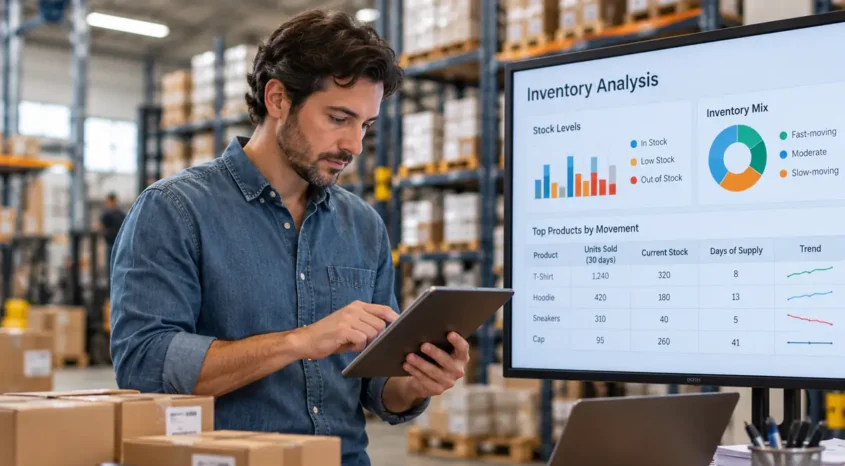
Modern B2B fulfillment depends on more than warehouse labor and transportation carriers. Businesses now rely on technology to coordinate inventory, orders, and shipping across multiple systems. These tools provide ecommerce brands and retailers the structure they need to manage growing orders while maintaining accuracy across fulfillment efforts. When systems work together, companies gain real-time visibility into inventory movement, order progress, and delivery timelines.
Order and Data Integration
Many companies rely on electronic data interchange to connect their systems with those used by retail partners. With this technology, information about purchase orders, shipping notices, and order updates can automatically move between businesses. Teams can track order progress, update order status quickly, and reduce manual entry that often leads to errors.
Inventory and Warehouse Management
Inventory platforms and warehouse management systems enable teams to organize storage locations, track stock levels, and monitor product movement inside the warehouse. Some tools also support expiration date management for products with shelf-life concerns, and help teams maintain accuracy when orders move through busy fulfillment operations.
Enterprise Resource Planning Systems
Enterprise resource planning platforms connect order fulfillment with accounting, purchasing, and broader business systems. This integration enables teams to manage inventory, orders, and financial records from one location. Businesses often gain cost efficiencies when these systems reduce duplicate work and streamline daily workflows.
Shipping and Logistics Tools
Shipping platforms help teams coordinate freight carriers, schedule deliveries, and prepare shipments for transport. Many B2B shipments require custom packaging or custom labeling to meet retailer requirements. Logistics tools help teams prepare shipments correctly and ensure retail partners receive products in the expected format.
Integrated fulfillment platforms
Some companies adopt integrated fulfillment solutions that combine order management, inventory tracking, and shipping coordination within one platform. These systems help ecommerce brands manage wholesale and retail operations together while maintaining real-time visibility across the supply chain.
Best Practices for Successful B2B Fulfillment
B2B fulfillment leaves little room for error. Late shipments can strain relationships with retail partners, inaccurate inventory can stall orders, and inefficient workflows can slow down business operations. Companies that follow strong fulfillment practices place themselves in a much better position to maintain reliable order fulfillment and consistent service as demand grows.
Companies that rely on B2B fulfillment should:
- Maintain accurate inventory records so warehouse staff can locate products quickly and maintain accuracy during order fulfillment.
- Monitor inventory across multiple locations to prevent overselling products or delaying bulk shipments.
- Use systems that provide real-time visibility into orders, inventory movement, and delivery timelines.
- Establish consistent workflows that help warehouse operations process orders efficiently and reduce fulfillment errors.
- Coordinate freight carriers and delivery schedules carefully to improve on-time delivery for retail partners.
- Follow packaging and labeling requirements closely, including any custom packaging or custom labeling standards retailers require.
- Track fulfillment performance metrics regularly to identify bottlenecks and improve cost efficiencies over time.
How Brightpearl Simplifies B2B Fulfillment
B2B fulfillment becomes harder to manage as order volume grows, sales channels expand, and more retail partners enter the picture. Many businesses try to manage these operations across separate systems for inventory, orders, accounting, and shipping. That approach often creates delays, duplicate work, and limited visibility into what is actually happening across the business.
Brightpearl brings these operations together in a single platform designed for retailers, wholesalers, and ecommerce brands. Instead of jumping between disconnected tools, teams can manage inventory, orders, and warehouse activity in one place.
With Brightpearl, businesses can:
- Centralize orders from wholesale, retail, and ecommerce channels in one system
- Track inventory across warehouses and distribution centers in real time
- Automate routine workflows such as order routing, invoicing, and fulfillment updates
- Connect with major ecommerce platforms and marketplaces through built-in integrations
- Monitor operations through reporting and dashboards that show how orders move through the business
- Coordinate fulfillment across multiple locations without losing visibility into stock or orders
By bringing these functions together, Brightpearl helps growing brands manage B2B fulfillment with fewer manual steps and clearer visibility across their operations.
The Importance of Reliable B2B Fulfillment
B2B fulfillment often runs behind the scenes, quietly moving products from warehouses to retailers and distribution partners. That behind-the-scenes role can make it easy to overlook, but reliable B2B fulfillment plays a major role in keeping retail partners stocked and customers happy.
Growing brands cannot afford to treat fulfillment as an afterthought. As wholesale demand increases, businesses need clear visibility into orders, inventory, and warehouse activity to keep operations running smoothly. Brightpearl brings these moving parts together in one platform so teams can manage B2B fulfillment with greater control.
Book a demo to see how Brightpearl can help streamline your operations.
Frequently Asked Questions
What is B2B fulfillment?
B2B fulfillment is the process businesses use to store products, process wholesale orders, and ship those products to other companies. Instead of sending individual packages to consumers, businesses ship larger quantities of goods to retailers, distributors, or other commercial buyers.
What is a B2B example?
A common B2B example is a brand selling products to a retailer that then sells those items to customers. For example, a clothing company might ship inventory to a department store, which then sells those products in its stores or online.
What are the needs of B2B customers?
B2B customers expect reliable deliveries, accurate orders, and clear communication about shipments. They also rely on suppliers to maintain consistent inventory availability so their own operations can continue without disruption.