If you’re planning a retail replatform, the usual advice is to take it one system at a time. The ERP changes one year, the website the next, and the warehouse system after that.
William Powell did it all at once. In roughly 12 months, the 200-year-old retailer replaced its entire retail tech stack, including its ERP, warehouse management system, PIM, email marketing and ecommerce platforms.
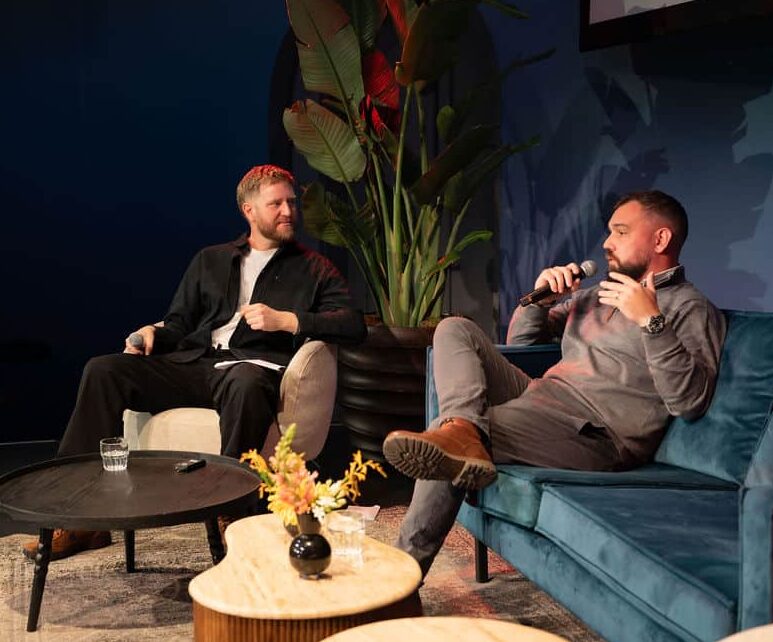
That was the focus of our panel at NXT: Commerce Summit Amsterdam on 5 November 2026. Ollie Slade, Partner Manager at Brightpearl by Sage, was joined by Lee Gower, Commercial Manager at William Powell, a heritage country clothing and gunmaking business and a Brightpearl customer. Lee talked through why the team changed everything in one go, what was harder than expected and how they’re now approaching AI.
Whether you were in the room or not, here are the key takeaways from the session.
Who is William Powell?
William Powell was founded as a gunmaker in Birmingham in 1802 and later moved into country clothing. Today it sells heritage brands such as Barbour and Schöffel alongside its own tweeds and ranges, shooting equipment and bespoke shotguns. It has a retail store and a gun room, and a catalogue of around 60,000 SKUs.
Why replatform everything at once?
Phasing an ERP migration or retail replatform is meant to reduce risk, but it has a cost that’s easy to overlook. Every old system you keep for another six or 12 months still needs connecting to the new ones, and that work is thrown away when the old system goes.
“We took the decision to change it all at the same time. Bigger risk, but earlier reward.”
(Lee Gower, William Powell)
By replacing everything together, William Powell avoided building integrations “into old systems that we knew we were going to change”, and only had to build them once. The trade-off was a bigger risk of missing the deadline, or of getting only part of the project live while the rest lagged behind. Much of the work went into building integrations with Brightpearl and making sure the data feeding them was consistent.
Brightpearl now sits at the centre as the ERP, managing inventory, stock updates and product information across every channel. Shopify runs retail ecommerce and in-store POS, BigCommerce runs the gun room site and Klaviyo handles email marketing.
Why product data was the hardest part of the replatform
The biggest job in the project was untangling processes and data. Before the change, a lot of how the business worked lived in people’s heads, driven by “people’s experiences” rather than by the data. Product and SKU naming relied on individual habits rather than rules, which led to inconsistencies everywhere.
The effects reached the warehouse, where inconsistent names meant pickers sometimes picked the wrong product. So the team rebuilt its SKU naming convention. Every SKU now includes gender, product, category and supplier, plus attributes such as colour and size. Existing products were converted into the new format, and new products follow the same rules.
That’s harder than it sounds when you stock dozens of brands.
“When you’re working with multiple brands that have 20, 30 different variants of a navy shirt, it gets really, really hard to standardise.”
(Lee Gower, William Powell)
The team spent months working through product data and schemas, filling gaps in attributes and looking at what customers wanted that the business didn’t yet offer. The data took longer than anything else in the project, but once it was right, the rest “just flowed”.
In hindsight, this process work was the biggest lesson of the whole project. Finding where people rather than systems were driving decisions, mapping it all out and understanding how each process affected customers and operations is what let a small team change so much, so quickly.
What shouldn’t you automate?
Mapping processes also showed where automation shouldn’t go. Some parts of the business need manual checks and clear guardrails, and firearms are the obvious example. With a lot of red tape involved, the team had to make sure the new systems weren’t “automatically processing something that shouldn’t have been processed”.
The gun room’s BigCommerce site is built for discovery rather than quick purchases. Bespoke shotguns are a considered, made-to-order purchase, so the site focuses on telling the story and setting out the options.
How to go live with a new ERP in one switchover
The switchover happened in one go. The team left the office on a Friday using the old systems and came back on the Monday to the new ones. Going live at the start of the week, rather than over a weekend, was a deliberate choice. Operationally, it was “night and day”.
Customers saw far less change. The storefront launched looking much as it had before, and the front end was updated gradually afterwards.
The smooth Monday came from months of preparation. Training started well before go-live, and in the run-up the team ran a shadow system, spending about 20% of their time working in both systems and duplicating orders and processes.
The whole project was run by an internal team of just four or five people, with close support from Brightpearl. The team stayed hands-on with its own data, products and processes, but an outside view caught things it would otherwise have missed.
“When you’re head down just looking at the data on a day-to-day basis, there is a time where you will be blind in some other areas.”
(Lee Gower, William Powell)
Managing inventory across 60,000 SKUs
Customers can buy Barbour from plenty of retailers. William Powell competes on service, from staff who have been with the business for 15 to 20 years, and on stock. As probably the UK’s largest stockist of country wear, the aim is to “have the stock when others will not”.
That only works if you manage stock tightly. With around 60,000 SKUs and some shoes and coats priced at £600–800 or more, too much stock ties up cash, especially in seasonal ranges, and too little means lost sales.
The team works in Inventory Planner every day. It works hand in hand with Brightpearl as part of Sage for Retail, showing trends, forecasts and size order patterns. That helps the team decide early whether a range needs an exit plan before the season ends, or whether it can be reordered with confidence. Overstock alerts flag SKUs carrying too much stock, using sales data from Brightpearl, Shopify and the other channels.
Using AI in retail to support staff, not replace them
With the new systems in place, William Powell is now looking at how AI can help day to day. The starting point is the people, and the goal is to “enrich roles” rather than replace them.
Many staff have decades of experience, and that experience is a big part of the service William Powell is known for. So rather than using AI to cut headcount, the aim is “taking the mundane out of the day to day”. That means finding where AI can reduce admin across the business, so people can “spend more time on the business rather than in the business”.
AI is also starting to change how customers find products. AI-led product discovery is on the rise, but it’s moving more slowly in William Powell’s market than in some others. When the product is a bespoke shotgun made to order, buyers research carefully before they commit. For that kind of considered purchase, the brand telling its own story still matters most.
Key takeaways
- Phasing has a hidden cost. Every integration you build into a system you’re about to replace is work you’ll throw away.
- Your data is the critical path. Product data took William Powell longer than anything else, and everything else depended on it.
- Map the knowledge in people’s heads. Find the decisions people make from memory and turn them into rules before you migrate.
- Don’t automate everything. Regulated products may still require manual checks and clear safeguards.
- Rehearse the switchover. Months of training and running both systems side by side let a team of four or five switch between a Friday and a Monday.
- Use AI to remove admin, not people. Experienced staff are a big part of what customers value.
Planning your own retail replatform?
Changing everything at once is a big risk. William Powell made it work by cleaning up its data, mapping its processes and practising the switchover well before go-live. Whether you phase your own change or do it all at once, the right ERP and the right support make all the difference.
Learn more about Brightpearl as a retail ERP, or book a demo to see it in action.