Key Takeaways
- Selling on consignment lets vendors keep ownership of their products while retailers sell on their behalf — a model increasingly relevant in ecommerce.
- Businesses may act as consignors (placing stock in other stores) to grow their reach or as consignees (selling another brand’s goods) to expand their product offerings without upfront costs.
- Success depends on clear agreements around payment timing, shipping, returns, insurance, and inventory communication.
- With the right inventory planning system, retailers and vendors can track inventory, sales, ad costs in real time, ensuring accurate reporting and smoother partnerships.
What is a consignment store
Selling on consignment is when vendors retain ownership of their products and contract with other retailers to store and sell those products. There are loads of articles (‘Selling products on consignment’, ’Consignment’ by Shopify, ‘11 tips when selling through consignment’) out there about consignment selling in traditional retail but barely any are focused on the consignment model in ecommerce. We will focus specifically on the benefits and costs of running a consignment model in ecommerce.
Managing consignment inventory in ecommerce
Outlining the basics of the model:
- Ownership Remains with the Supplier: The supplier (consignor) owns the products and retains ownership even after they are placed in the e-tailer’s (consignee’s) care.
- Inventory is Stored and Displayed: The e-tailer takes responsibility for displaying, marketing, and selling the consigned products on their ecommerce platform, just like their own inventory.
- Payment Upon Sale: The e-tailer only pays the supplier after an item has been successfully sold and the transaction is complete.
- Commission or Fee: In exchange for their services, the e-tailer earns a pre-arranged commission or flat-rate fee from the sale price.
Unsold Items Returned: Any unsold items are returned to the supplier at the end of the agreed-upon consignment period.
Why adapt the consignment model to ecommerce
Any business can sell as a consignor or consignee but there are a few common reasons to adopt as both a consignor or a consignee.
Benefits for the consignor
When to think about becoming a consignor (putting your inventory in another business):
- Your own retail customers have a strong web presence or sales team, and you don’t
- Your product is unknown or expensive – it can be difficult to convince retailers to tie up their precious cash and space into a product they don’t know or haven’t sold before.
- You have a system in place to effectively support you by tracking your inventory and sales at your retailers. This is imperative to maintain an accurate balance sheet and income statement since you have assets spread across many locations.
Benefits for the consignee
Strictly a retailer? Here are some questions to ask yourself when considering becoming a consignee instead (putting another business’ inventory in your store):
- You want to try a new product but can’t risk tying up cash into something that might not sell
- Cashflow is a concern – consignment aligns payment to vendors with when you make a sale, rather than months in advance.
- Your vendor has a reliable and consistent supply chain and will ensure you’re warehouse shelves are never empty.
Brightpearl makes it easy to manage consignments. View a demonstration to find out how it works.
Consignment model best practices
This isn’t something to rush into and there are a few agreements that need to be made before a consignment model can be adopted:
Payment: Even though all consignment agreements are based on payment to vendor after the sale of a product there are a few different ways retailers can settle their debt.
- Time of sale – every time a consignment item is sold, a payment is made for that item to the consignor
- End of a period – at the end of a week/month/year payments are made for all consignment items sold
- Order to order – the consignee pays for all items on a previous consignment order once they place a new order
Furthermore, some important replenishment questions to consider are:
- Who pays for freight/shipping of consignment items?
- What happens if items are damaged or defective?
- How will inventory levels be communicated? By hand? Email? Integration?
- Who is responsible for the insurance of products?
- Do customers return items to the retailer, or the vendor?
Selling on consignment can be lucrative for all involved but relations can quickly become strained because of poor data around inventory levels.
Brightpearl allows vendors and retailers to:
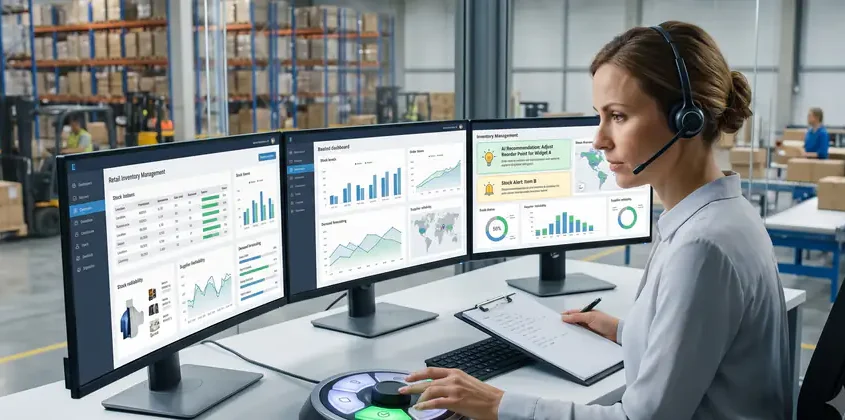
- Provide live inventory levels
- Accurately track the assets, revenue and costs associated with consignment
With Brightpearl, consignors can:
- Maintain an accurate inventory asset value even with inventory spread across many locations
- Stay on top of their inventory levels across all of their consignments by drawing up a new inventory location to represent each one, including minimum stock levels and reporting for each
- Import orders through spreadsheets or via the API for when things really take off, and use Sales Analysis reports to understand the best performing products and locations
- Track outstanding consignee debt to ensure you’re paid for what was sold
…and consignees can manage processes just as easily by:
- Reordering and receiving stock via purchase orders while correctly accounting for the initial zero cost value of items
- Generate sales analysis reports to understand product performance by vendor
- Include external branding for any stationary or templates to handle any bespoke returns policies
Drawbacks of the consignment model
These points are already covered, but not as a dedicated section:
- Operational Complexity: You need robust systems for tracking assets spread across multiple locations — without this, relationships strain quickly.
- Data Issues: Poor tracking of inventory and sales can create disputes and mistrust.
- Risk Allocation Questions: Who pays for shipping, handles damages, insures goods, or processes returns? These potential “hidden costs” are left to negotiations.
- Dependency Risks: For retailers, reliance on vendors’ supply chain reliability; for vendors, dependency on retailers’ sales performance.
And add these points:
- Increased liability exposure.
Margin erosion compared to wholesale.
Legal/contractual risks in ecommerce (cross-border, digital returns, etc.).
How Brightpearl facilitates the consignment model
Need advice on how to get set up? Request a callback and one of our retail specialists will get in touch.