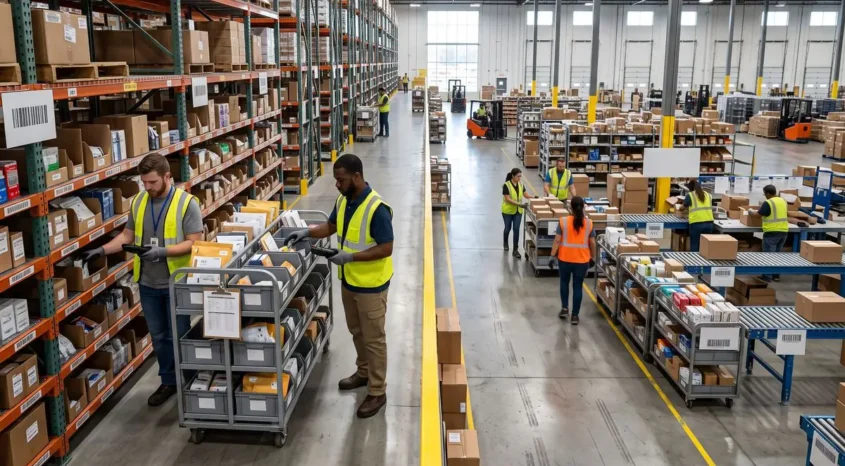
Understanding warehouse operations is essential for any retailer that wants to grow efficiently. Every step from receiving and storage to picking, packing, and shipping affects how quickly and accurately customers receive their orders. When warehouse management systems are properly utilized, businesses reduce costs, improve inventory accuracy, and strengthen customer trust. Poorly run warehouse operations, however, lead to delays in inventory flow, manual errors, and rising costs. Knowing how each stage connects allows warehouse operations managers to make better decisions about layout, staffing, and technology.
What Are Warehouse Operations?
Warehouse operations refer to the day-to-day activities that keep inventory moving efficiently from the moment products arrive until they reach the customer. These activities include receiving shipments, storing goods, optimizing inventory levels, picking and packing orders, and managing shipping and returns. In retail and e-commerce, effective warehouse operations ensure that stock levels are accurate and that customer orders are fulfilled quickly and correctly. When daily warehouse operations are well organized, they reduce costs, minimize errors, and support consistent customer satisfaction.
The Key Warehouse Processes
Every warehouse, regardless of size or industry, follows a similar flow designed for efficient supply chain operations. Understanding each stage helps businesses identify where time, labor, and costs can be reduced. The goal is to build a process that improves warehouse efficiency by keeping inventory levels accurate, minimizes delays, and ensures every order reaches the customer on time.
The main overall warehouse operations consist of:
Receiving and Inspection
Warehouse operation management begins the moment new inventory arrives. Shipments are checked against purchase orders to confirm quantities and product quality. Items are inspected for damage or inconsistencies before being recorded in the system. A strong receiving process in an essential aspect of warehouse management, preventing overstocking, reducing discrepancies, and setting the tone for even more efficient warehouse operations later on.
Put-Away and Storage
After inspection, products must be placed in the correct storage space locations as part of an efficient inventory management system. The put-away process determines how quickly items can later be found and retrieved. Using organized methods such as zoning, slotting, or ABC classification allows workers to move efficiently and keep pathways clear. The goal is to maximize storage space while maintaining easy access to fast-moving stock, helping to optimize warehouse operations overall.
Inventory Control
Inventory control is one of the key processes in warehouses. Accurate inventory control ensures that the recorded quantities match what is physically in stock. Regular cycle counts, barcode scanning, and automated tracking systems help with managing inventory and preventing shrinkage and stockouts. Effective inventory management and control also support demand forecasting, allowing businesses to optimize inventory levels before shortages occur, reduce overstock that ties up capital, and increase supply chain efficiency.
Picking and Packing
Picking and packing orders are where the warehouse operations process has the most direct impact on customer satisfaction. Common picking process methods include batch, wave, or zone picking, each suited to different order volumes and layouts. Once items are picked, careful packing ensures that products are protected during shipment. Streamlined retrieval systems in this stage of the warehouse operations play an important role in reducing handling time and minimizing errors that can lead to returns. Many warehouse facilities establish a packing and shipping area to help ensure an efficient workflow.
Shipping and Fulfillment
The shipping stage is the final step of the warehouse operations process. Orders are labeled, verified, and dispatched through the appropriate carriers. Good communication between the warehouse and shipping teams helps prevent delays and ensures customers receive accurate tracking updates. A smooth fulfillment process reduces delivery time while strengthening brand reliability and customer trust.
Supporting Functions That Keep Warehouse Operations Efficient
Beyond the core stages of movement and fulfillment, several supporting functions ensure warehouse operations continue to run smoothly day after day. These supply chain operations maintain order, improve workflow, and help businesses adapt to changing demands without losing warehouse efficiency.
Returns Management
Handling returns effectively is an important part of managing warehouse operations and is essential for maintaining customer satisfaction and protecting profit margins. A structured process for inspecting, restocking, or disposing of returned items prevents bottlenecks and keeps inventory levels accurate. Clear policies and standardized procedures help teams process returns quickly while ensuring that resaleable goods re-enter the system without delay.
Warehouse Layout and Optimization
The physical design of a warehouse directly affects productivity. A well-planned layout optimizes inventory management by reducing unnecessary movement, shortening picking routes, and ensuring high-demand items are easily accessible. Businesses often designate a packing and shipping area and analyze traffic flow, shelf height, and storage zones to optimize space.
Labor and Workflow Management
Efficient warehouse operations depend on streamlined warehouse management systems and skilled, organized teams. Setting clear roles, performance targets, and shift schedules keeps activity balanced and consistent throughout the day. Investing in training, safety, and clear communication helps workers complete tasks faster and more accurately. When labor and workflow are aligned, warehouse operations experience fewer delays, less waste, and higher morale among staff.
How Technology and Automation are Changing Warehouse Management
Technology has reshaped warehouse operations, replacing manual processes with systems that improve accuracy, speed, and visibility. Modern warehouse technology helps warehouse workers manage every aspect of fulfillment, from inventory management to shipping completed orders. The right setup for warehouse operations reduces errors, saves time, and supports growth as order volumes increase.
Warehouse Management Systems (WMS)
A warehouse management system, or WMS, is software that helps businesses control, organize, and optimize every process that takes place inside the warehouse. Warehouse management systems coordinate daily operations such as receiving, picking, packing, and inventory tracking. This warehouse management software centralizes data so staff can:
- Monitor stock levels in real time
- Update order statuses instantly
- Reduce the need for manual data entry
- Improve decision-making with accurate, up-to-date information
Data Capture and Tracking
Barcoding, RFID tags, and mobile scanners give teams real-time inventory visibility for locations and movement. These tools eliminate the guesswork of inventory management, allowing workers to find items quickly, confirm quantities, and prevent discrepancies between digital records and physical stock.
Automation and Robotics
Warehouse automation handles repetitive or labor-intensive tasks that slow down warehouse operations. Examples of automation and robotic warehouse equipment include:
- Conveyor belts that move goods between packing stations
- Robotic arms that automate storage and picking
- Autonomous vehicles that transport stock within the warehouse
These systems reduce strain on workers while boosting labor productivity, increasing operational efficiency, and allowing teams to focus on quality control and planning.
Integrated Technology
Integrations between warehouse systems, shipping platforms, and sales channels ensure that information flows smoothly, helping to maintain optimal inventory levels and improve overall warehouse processes. Orders can move from online checkout to shipment without manual intervention. This connectivity shortens fulfillment times and gives customers faster, more reliable delivery updates.
By adopting these technologies as part of the standard warehouse processes, businesses can create efficient workflows for warehouse operations, adapt easily to changing demand, and improve customer satisfaction.
Common Challenges in Warehouse Operations and How to Solve Them
Even well-organized warehouses face supply chain management challenges that can disrupt accuracy, efficiency, and customer satisfaction. Understanding these common issues and how to address them helps businesses build stronger, more resilient operations.
Discrepancies in Inventory Management
One of the most common issues when managing inventory is stock levels that do not match system records. This can lead to stockouts, missed sales, and frustrated customers. Regular cycle counts, barcode scanning, and real-time tracking software help prevent these inconsistencies and lead to better inventory management. Clear procedures for receiving and returns also keep inventory data accurate.
Inefficient Order Routing
When orders are not directed to the right warehouse storage areas or fulfillment centers, picking takes longer, and shipping costs increase. Optimizing warehouse operations and using automated order routing ensures that items are picked from the best possible location. This shortens fulfillment time and reduces labor costs.
Delayed Packing and Shipping
Timely and accurate delivery is essential for meeting customer expectations. Slow fulfillment can result from poor coordination between the warehouse, shipping, and customer service teams. Establishing standardized workflows and integrating order management systems keeps everyone aligned. Monitoring key metrics, such as order processing time, helps identify bottlenecks before they escalate.
Lack of Visibility
Without clear visibility into inventory management and order progress, it becomes difficult to plan or respond quickly to demand changes. Centralized reporting tools and real-time dashboards in warehouse management software give warehouse managers the information needed to make faster, data-driven decisions.
Poor Space Utilization
Cluttered or disorganized storage reduces efficiency and increases handling time. Regularly reviewing warehouse layout, reassigning storage zones, and removing obsolete stock can free up valuable space. An organized warehouse space improves productivity and lowers safety risks.
Addressing these challenges proactively helps create a warehouse that runs smoothly, supports business growth, and delivers consistent customer satisfaction.
Measuring and Improving Warehouse Performance
Tracking performance is essential to maintaining and increasing warehouse productivity. By measuring key metrics, businesses can identify weak spots in their warehouse operations, make informed improvements, and ensure that every process contributes to faster, more accurate fulfillment.
Key Warehouse Performance Indicators
The most effective warehouses track measurable goals that reflect both accuracy and speed. Common metrics include:
- Order accuracy rate: The percentage of orders shipped without errors
- Inventory turnover: How often stock is sold and replaced during a set period
- Average fulfillment time: The time it takes to process an order from receipt to dispatch
- Cost per order: The total operational cost divided by the number of fulfilled orders
- Space utilization: The percentage of available warehouse space actively used for storage and operations
Monitoring these KPIs helps warehouse managers identify inefficiencies, control expenses, and improve overall output.
Using Data to Drive Improvement
Performance data should guide decision-making rather than simply measure results. Regular reporting allows teams to:
- Identify trends such as rising fulfillment times or increasing error rates
- Adjust staffing levels and shift schedules to match order volume
- Reconfigure warehouse layouts to reduce travel time between zones
- Evaluate technology and training needs based on observed bottlenecks
Continuous Optimization of Warehouse Operations
Warehouse operations are constantly evolving as demand, product mix, and shipping expectations change over time. Setting a routine review schedule, such as monthly or quarterly, keeps performance goals relevant and encourages steady improvement. Even small adjustments like refining picking routes or updating storage labels can have a significant effect on speed and accuracy.
By consistently measuring results and applying insights, businesses can turn their warehouse into a reliable, high-performing part of the supply chain that supports long-term growth.
How Brightpearl Helps Improve Warehouse Operations
Running a warehouse efficiently takes more than effort. It takes the right system to connect every process and keep things moving without interruption. Brightpearl gives retailers that system by linking inventory, fulfillment, and shipping into one seamless workflow. The result is faster turnaround times, fewer mistakes, and efficient warehouse operations.
Here is how Brightpearl makes it happen:
- Centralized inventory visibility: Instantly see what is in stock, where it is located, and when it needs to be replenished across multiple locations. Brightpearl keeps every warehouse and sales channel aligned to eliminate guesswork and prevent overselling.
- Automated order fulfillment: Orders move from checkout to shipment automatically with smart routing, digital pick lists, and efficient packing. Teams spend less time on manual tasks and more time focusing on customer satisfaction.
- Integrated shipping and returns: Connections to leading carriers make it easy to print labels, dispatch packages, and track deliveries in real time.
- Live performance insights: Real-time dashboards reveal how the warehouse is performing. These tools help warehouse managers play an essential role in identifying trends early and making quick, data-driven improvements.
- Effortless scalability: As order volumes grow, Brightpearl’s automation scales with the business, handling increased demand without adding complexity or slowing operations.
By combining visibility, automation, and insight, Brightpearl helps retailers turn their warehouse into a competitive advantage that delivers consistency, speed, and reliability with every order.
See How Brightpearl Can Transform Your Warehouse Operations
Warehouse operations are the foundation of every successful retail business. When receiving, storage, fulfillment, and shipping all work together smoothly, the result is faster delivery times, reduced costs, and happier customers. Understanding each stage of warehouse operations helps retailers enhance efficiency and identify where technology can make the biggest impact.
Brightpearl gives growing businesses the tools to turn that understanding into action. Automating repetitive work, unifying data across channels, and providing clear insight into performance help retailers run warehouses that are both agile and accurate. The outcome is a streamlined operation that keeps pace with customer demands and supports long-term growth.
Ready to take your warehouse to the next level? Book a demo today and see how Brightpearl can simplify your operations, enhance efficiency, and keep your business moving forward.