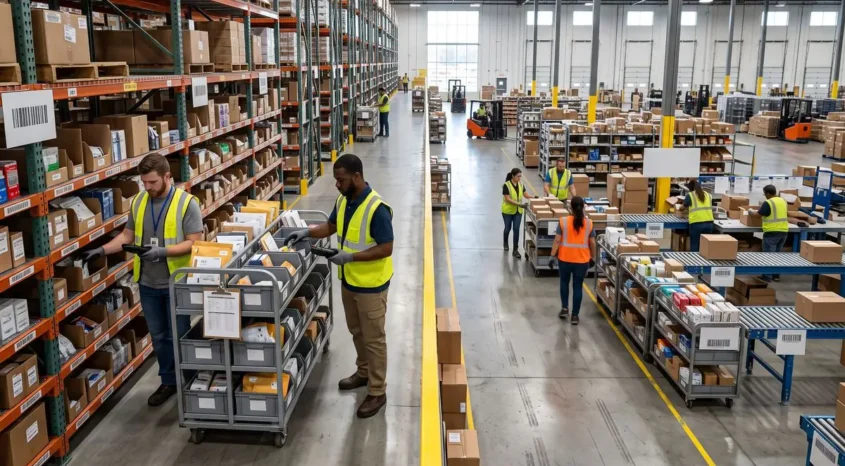
When it comes to retail supply chain management trends, 2025 is reshaping how businesses operate and compete. What was once viewed as a back-office function has become an essential aspect of customer satisfaction, profitability, and long-term growth. Companies that want to meet rising customer expectations and navigate an increasingly complex global marketplace need to adapt to these supply chain trends or be left behind.
Recent trends in supply chain operations point toward a future that is more data-driven, digitally connected, and resilient. Advances in technology, including artificial intelligence and automation, are streamlining everyday operations and improving decision-making. Global trade dynamics are shifting in response to geopolitical changes and sourcing challenges. And customers are demanding greater transparency, faster fulfillment, and more sustainable practices.
Together, these shifts are defining the retail supply chain trends in 2025 that every business leader should understand to stay competitive.
What are the Trends in Supply Chain Management in 2025?
Understanding the latest supply chain trends is essential for retailers looking to stay competitive in a rapidly evolving marketplace. Advances in technology, shifting trade dynamics, and rising customer expectations are shaping emerging trends that will influence how businesses approach everything from forecasting to inventory management. By recognizing these supply chain trends early, companies can adapt their strategies, strengthen operations, and mitigate risks that threaten efficiency and long-term growth.
1. AI and Automation
One of the most significant supply chain trends in 2025 is the expansion of artificial intelligence and automation. These technologies are becoming central to how retail executives plan, manage, and optimize their operations.
AI is helping companies move beyond reactive decision-making by analyzing sales data, customer behavior, and external market factors to produce accurate forecasts. This leads to smarter purchasing, reduced waste, and improved product availability.
Automation applies these insights by streamlining repetitive and time-consuming tasks. Across the industry, common applications include:
- Order fulfillment: Automatically processing and allocating orders based on stock levels, payment status, or order type to speed up delivery times.
- Warehouse operations: Using automated systems for picking, packing, and inventory counts to reduce errors and labor costs.
- Invoicing and documentation: Generating invoices, purchase orders, and shipping labels automatically to save time and improve accuracy.
- Transportation and routing: Optimizing delivery routes with AI-powered tools to cut costs and shorten shipping times.
The combination of AI-driven insights and automated workflows is creating supply chains that are faster, smarter, and more resilient. Retailers that adopt these technologies are aligning with the most impactful supply chain trends and building a foundation for long-term competitiveness.
2. Data-Driven Decision Making
There has been a notable shift toward data-driven decision making in recent supply chain trends. Retailers are moving beyond static reports and intuition to rely on advanced analytics that turn raw data into actionable insights.
Big data allows companies to monitor customer demand, consumer spending, supplier performance, and market shifts in real time. This emerging trend creates opportunities for more accurate forecasting, better inventory management, and smarter resource allocation across the supply chain.
Examples of how data-driven strategies are being applied include:
- Demand forecasting: Using predictive analytics to anticipate sales patterns, seasonal changes, and shifts in customer behavior.
- Inventory optimization: Identifying slow-moving products and high-demand items to adjust stock levels and reduce holding costs.
- Supplier performance tracking: Monitoring lead times, delivery accuracy, and product quality to refine supplier relationships.
- Customer insights: Analyzing purchasing habits to align supply chain decisions with evolving expectations.
- Scenario modeling: Running “what if” simulations to prepare for disruptions such as demand spikes or supply delays.
Retailers that embrace these practices gain clearer visibility into their operations, improve operational efficiency, and create supply chains that are more resilient and customer-focused.
3. Connected Supply Chains
One of the major retail supply chain trends 2025 is the move toward fully connected supply chains. Fragmented systems create inefficiencies, delays, and blind spots that limit growth. To stay competitive, retailers are integrating functions such as inventory management, order processing, accounting, and logistics into unified platforms that share data seamlessly.
A connected supply chain provides real-time visibility across departments and partners, improving supply chain visibility while reducing errors. This improves collaboration, reduces errors, and ensures that information flows without interruption from suppliers to end customers.
Examples of connected supply chain practices include:
- System integration: Linking ERP, CRM, warehouse management, and logistics systems into one coordinated network.
- Multichannel operations: Synchronizing data across online stores, marketplaces, and physical locations to prevent overselling and stock discrepancies.
- Supplier collaboration: Sharing forecasts and order updates directly with vendors to improve accuracy and reduce lead times.
- Logistics coordination: Connecting carriers and fulfillment partners to track shipments in real time and respond quickly to delays.
- Cloud-based platforms: Centralizing data so teams across multiple regions or facilities can access accurate information at any time.
The result is a supply chain that is faster, more transparent, and better prepared to meet the demands of modern retail. Businesses that invest in connectivity are positioning themselves for greater operational efficiency and long-term success.
4. Global Trade Shifts
Trade dynamics are reshaping the entire global supply chain. Retailers are navigating an environment influenced by shifting tariffs, new trade agreements, and ongoing geopolitical uncertainty. These factors are forcing businesses to reconsider where and how they source products.
Companies that once relied heavily on overseas manufacturing are exploring nearshoring and regional sourcing strategies. Moving production closer to end markets can reduce lead times, cut transportation costs, and lower exposure to international disruptions. At the same time, global networks remain vital for accessing specialized materials, diverse product categories, and competitive pricing.
Examples of how retailers are responding to these trade shifts include:
- Nearshoring initiatives: Partnering with suppliers in nearby countries to reduce shipping times and increase flexibility.
- Supplier diversification: Expanding supplier networks to avoid overreliance on a single region or vendor.
- Scenario planning: Preparing for the financial impact of tariffs, regulations, or sanctions before they occur.
- Regional distribution hubs: Establishing fulfillment centers closer to major consumer markets to speed up delivery.
- Sustainability considerations: Factoring in the environmental impact of long-distance shipping when evaluating sourcing options.
Balancing global and regional strategies has become an essential part of retail supply chain management trends in 2025, helping retailers deliver global customer value while remaining competitive.
5. End-to-End Transparency
Visibility is one of the most important supply chain trends for retail. Customers, regulators, and business partners expect to know where products come from, how they are made, and when they will arrive. Retailers that provide this level of visibility build stronger trust and gain a competitive edge in crowded markets.
Technology is playing a major role in improving traceability. Supply chain professionals are increasingly relying on blockchain, IoT devices, and real-time tracking platforms to monitor goods throughout the entire journey. These tools reduce the risk of lost shipments, counterfeiting, or ethical concerns going unnoticed.
Examples of how transparency is being achieved include:
- Blockchain solutions: Recording each stage of the supply chain on a secure ledger to provide verifiable product histories.
- IoT sensors: Monitoring the condition of goods in transit, such as temperature or handling, to ensure quality is maintained.
- Real-time shipment tracking: Providing both retailers and customers with live updates on delivery status.
- Compliance reporting: Using digital tools to demonstrate adherence to labor standards, sourcing requirements, and sustainability goals.
- Customer communication: Sharing information about product origins and supply chain practices to strengthen brand loyalty.
For supply chain professionals, end-to-end transparency is no longer a future goal but a present necessity. Businesses that prioritize visibility reduce risk, build trust, and position themselves with a lasting competitive edge.
6. Supply Chain Resilience
Disruptions from global events, natural disasters, and shifting consumer demand have highlighted the need for systems that can adapt quickly. Retailers are learning that efficiency alone is not enough, and resilient supply chains are a must-have in today’s world. The ability to withstand shocks and recover swiftly is now a competitive advantage and an important supply chain trend.
Supply chain professionals are approaching resilience with strategies that emphasize flexibility, diversification, and preparedness. Building resilience into supply chain operations does not eliminate risk, but it does allow businesses to minimize the impact of unexpected challenges.
Common approaches include:
- Supplier diversification: Working with multiple suppliers across different regions to avoid overreliance on a single source.
- Inventory buffers: Holding additional safety stock of high-demand items to reduce vulnerability to delays.
- Scenario planning: Running simulations to prepare for disruptions such as demand spikes, supplier failures, or transport delays.
- Regional distribution networks: Creating fulfillment hubs closer to customers to shorten lead times and improve responsiveness.
A resilient approach to supply chain operations helps retailers maintain service levels when disruptions occur, protect customer relationships, and safeguard profitability. In 2025, resilience is not simply a defensive strategy but a way to create a more responsive supply chain that adapts quickly to change.
7. Smarter Supplier Strategies
Supply chain trends show that supplier relationships are now a strategic asset, not just a transactional necessity. Global trade shifts, rising customer expectations, and increased scrutiny on ethical practices require a more deliberate approach to supplier management.
Supply chain professionals are placing greater emphasis on building strong, diversified, and transparent supplier networks. This allows businesses to reduce risk, improve collaboration, and ensure that sourcing decisions align with both performance goals and brand values.
Examples of smarter supplier strategies include:
- Diversification: Expanding supplier bases across multiple regions to avoid disruption from localized events.
- Performance evaluation: Tracking lead times, order accuracy, and quality metrics to guide supplier decisions.
- Collaborative planning: Sharing forecasts and market insights with suppliers to improve coordination and reduce delays.
- Ethical sourcing: Prioritizing vendors that meet labor standards, sustainability commitments, and compliance requirements.
- Technology integration: Using digital platforms to connect with suppliers, monitor activity, and increase visibility across the supply chain.
Retailers that implement smarter supplier strategies are better prepared to mitigate risks, maintain consistent product availability, and strengthen brand reputation. In a competitive retail landscape, strong supplier partnerships are becoming a defining advantage.
8. Cybersecurity Safeguards
Cybersecurity has become a critical focus in supply chain management. As retailers adopt more digital tools and connect systems across global networks, they are also exposing themselves to new risks. Cyberattacks targeting supply chains can disrupt operations, create new supply chain risks, compromise customer data, and damage brand reputation.
Supply chain professionals recognize that resilience is not only about physical disruptions but also digital threats. Building strong cybersecurity safeguards is now considered essential for protecting both operations and customer trust.
Common measures being implemented include:
- Vendor vetting: Assessing third-party partners for security standards to ensure weak links do not compromise the network.
- Access controls: Restricting system access based on roles and responsibilities to reduce the chance of breaches.
- Data encryption: Protecting sensitive information during storage and transmission.
- Incident response planning: Creating clear protocols to respond quickly and minimize damage if a breach occurs.
- Continuous monitoring: Using advanced analytics and AI tools to detect suspicious activity in real time.
Strong cybersecurity practices provide more than protection. They give retailers the confidence to expand digital integration, pursue innovation, and maintain a competitive edge in an environment where digital threats are becoming more frequent and sophisticated. Investing in better cybersecurity is one supply chain trend no business can afford to ignore.
9. Workforce Transformation
As technology reshapes daily operations, supply chain transformation is redefining the roles and responsibilities of employees. Automation and AI are taking over repetitive tasks, allowing staff to focus on oversight, strategy, and customer service.
For supply chain professionals, this shift requires new skills and continuous learning. Companies are investing in training programs to upskill employees in areas such as data analysis, system integration, and digital collaboration. At the same time, workforce planning is becoming more important as retailers balance automation with human expertise.
Examples of workforce transformation include:
- Reskilling initiatives: Training employees to work with new technologies, from robotics to advanced analytics platforms.
- Remote collaboration tools: Enabling supply chain teams to coordinate across regions with cloud-based systems.
- Specialized roles: Creating positions focused on sustainability, risk management, and cybersecurity.
- Employee empowerment: Allowing staff to make faster, data-driven decisions with the help of real-time insights.
- Retention strategies: Building career development paths that attract and keep top talent in a competitive job market.
Workforce transformation is not about replacing people but about redefining their value. As workforce expectations evolve, supply chain trends point toward a future where human expertise and technology grow increasingly intertwined.
10. Proactive Risk Management
Proactive risk management has become increasingly important as companies look for ways to anticipate challenges rather than simply react to them. Disruptions caused by global events, natural disasters, and cyber threats have shown that unprepared supply chains can quickly lose ground. Supply chain managers who actively identify and address risks gain greater stability and a stronger competitive edge.
Supply chain professionals are using a mix of technology and strategy to build more secure and adaptable networks. The focus is on creating systems that highlight vulnerabilities early and provide options for rapid response.
Examples of proactive risk management include:
- Scenario modeling: Running simulations to prepare for demand spikes, supplier failures, or transportation delays.
- Supplier risk assessments: Evaluating financial health, reliability, and compliance records of vendors before disruptions occur.
- Diversified sourcing: Reducing reliance on a single supplier or region to limit exposure.
- Digital twins: Building virtual models of supply chains to test strategies in a safe environment.
- Real-time monitoring: Using advanced analytics to identify potential risks and trigger alerts for faster action.
By taking a proactive approach, retailers can mitigate risks, reduce exposure to costly disruptions, and maintain consistent service for customers. Risk management is no longer a secondary function but a strategic priority for long-term success.
The Digital Foundation of Modern Supply Chains
Technology is at the center of supply chain management trends in 2025. Artificial intelligence, automation, analytics, and digital integration are combining to create networks that operate with greater speed, intelligence, and resilience. Supply chain professionals are using these tools to connect systems, eliminate silos, and gain real-time visibility across operations. This integration improves forecasting, strengthens supplier collaboration, and allows retailers to respond quickly to changing conditions.
Cloud-based platforms make accurate information accessible across regions, while cybersecurity safeguards ensure that digital collaboration remains secure. Technology does not replace strategy, but it enhances every part of it. Retailers that invest in strong digital foundations are better equipped to adapt, meet customer expectations, and achieve a lasting competitive edge.
How Brightpearl Can Help in 2025
Adapting to retail supply chain trends in 2025 requires more than identifying challenges. Retailers need practical tools that bring automation, visibility, and agility into everyday operations. Brightpearl is designed to deliver exactly that, giving supply chain professionals a platform that keeps pace with the demands of modern retail.
Brightpearl helps retailers stay ahead with:
- Automation at scale: Streamlines order processing, invoicing, and fulfillment workflows, reducing manual tasks and speeding up delivery times.
- Connected operations: Integrates inventory, accounting, logistics, and sales channels into a single system, eliminating silos and improving collaboration.
- Smarter forecasting: Provides real-time data and reporting to support demand planning and inventory optimization.
- Supplier management: Tracks performance, monitors lead times, and helps maintain strong vendor relationships.
- Scalable visibility: Offers cloud-based access so teams across regions can share accurate, up-to-date information.
With these capabilities, Brightpearl helps retailers respond faster to shifting conditions, build resilience into their supply chains, and deliver the seamless customer experience that defines success in 2025.
Future-Proof Your Supply Chain Today
Supply chain management trends in 2025 highlight the need for retailers to be more agile, data-driven, and digitally connected than ever before. From AI and automation to smarter supplier strategies and proactive risk management, retail executives who embrace change will be best positioned for long-term success.
Brightpearl provides the platform to put these strategies into action. By automating workflows, connecting systems, and delivering real-time insights, it helps retailers adapt to shifting conditions and stay ahead of customer expectations. Ready to strengthen your supply chain for the future? Book a Demo today and see how Brightpearl can help your business thrive in 2025 and beyond.