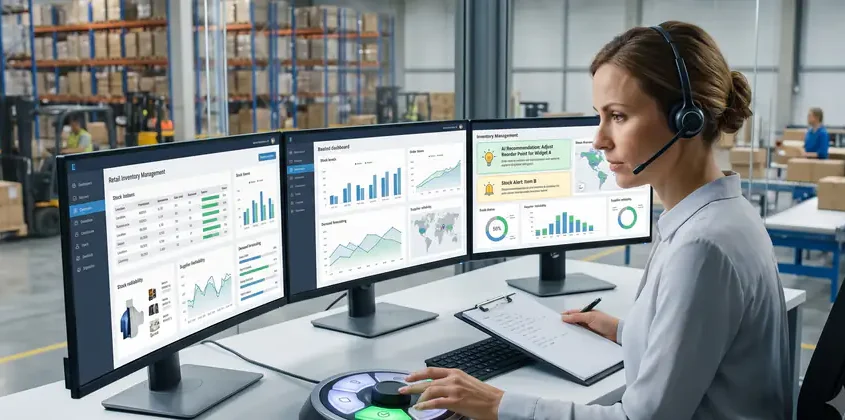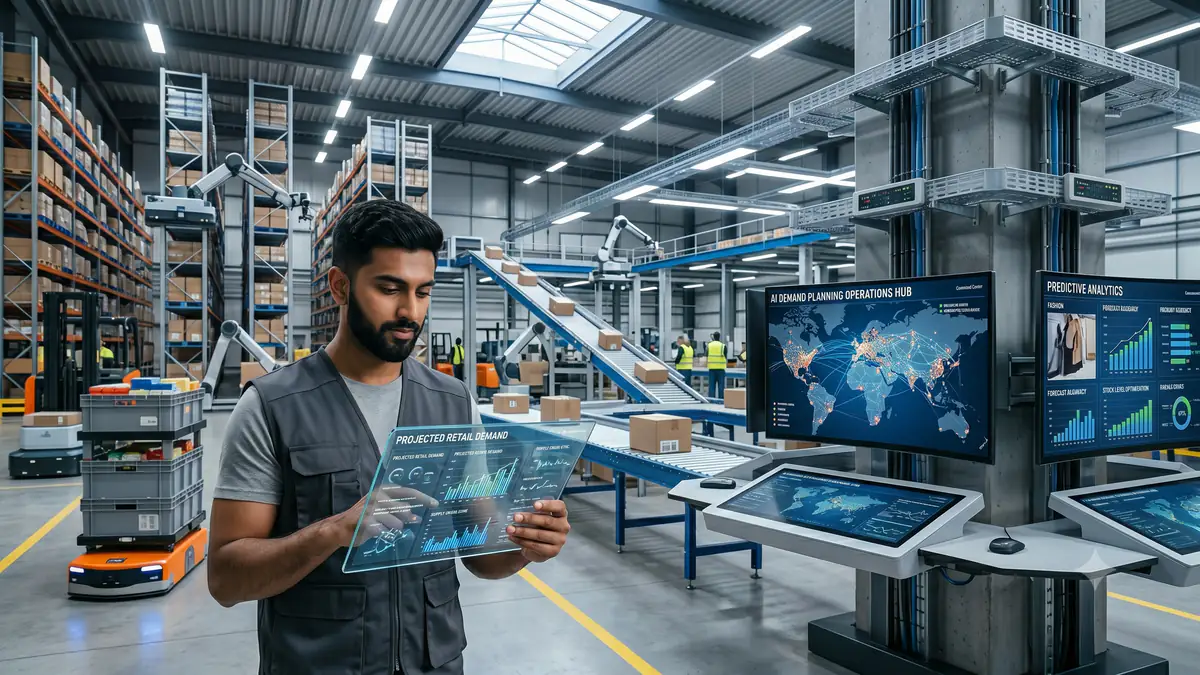
Modern retail moves fast. Customer behavior changes quickly, sales happen across multiple channels, and inventory decisions carry more financial risk than ever before. For many retailers, traditional forecasting methods like spreadsheets and manual calculations are no longer enough to keep pace.
AI demand planning offers a better approach for improving supply chain efficiency. The AI-based method helps retailers enhance forecast accuracy, better optimize inventory levels, and analyze historical data more efficiently to guide planning decisions. By applying predictive analytics to sales trends, seasonality, product performance, and other demand signals, AI can help businesses respond faster to changes and plan inventory with greater accuracy.
In this guide, we’ll explain how AI demand planning works, the challenges it helps solve, and how retailers can use it to improve forecasting, replenishment, and inventory efficiency across growing operations.
Key Takeaways
- AI demand planning helps retailers use sales, inventory, supplier, and channel data to make more informed forecasting and replenishment decisions.
- Unlike traditional demand planning, AI can analyze larger data sets, identify demand patterns faster, and adjust forecasts as conditions change.
- AI demand planning can help reduce stockouts, limit excess inventory, improve purchasing decisions, and support stronger cash flow.
- Retailers still need human judgment to interpret forecasts, manage promotions, account for supplier constraints, and turn insights into action.
- Brightpearl helps retailers connect demand planning with inventory, purchasing, fulfillment, reporting, and automation workflows, especially through its integration with Inventory Planner.
What Is AI Demand Planning?
AI demand planning is the process of using artificial intelligence, machine learning, and automation to forecast customer demand and make data-driven inventory planning decisions.
Traditional demand planning relies on historical sales data, spreadsheets, and manual forecasting. The use of AI in demand planning builds on these methods by analyzing larger amounts of both internal and external data sources, identifying complex patterns more quickly, and adjusting forecasts as new information becomes available.
This AI-driven demand planning process helps retailers make more informed decisions around purchasing, replenishment timing, stock allocation, supply chain management, and seasonal inventory preparation. Instead of relying on static forecasts or manual calculations, teams can leverage AI capabilities to respond faster to changing demand patterns and manage inventory more efficiently across channels and locations.
The goal is not just to predict demand, but to help retailers turn forecasting insights into clearer operational and inventory decisions.
AI Demand Planning vs. Traditional Demand Planning
Traditional demand planning methods are built around fixed forecasting cycles and historical sales patterns. AI demand planning is designed to be more responsive, helping retailers adjust forecasts as demand conditions change.
This becomes especially important for businesses managing large product catalogs, multiple sales channels, and changing inventory needs across locations. Instead of relying on static planning models, retailers can respond more quickly to shifts in sales activity, seasonality, and purchasing trends.
AI Demand Planning vs. Demand Forecasting
Those new to the concept of AI demand planning often run into some confusion due to how much it overlaps with AI-driven demand forecasting. While demand forecasting and demand planning are closely connected, they are not the same thing.
AI-enabled demand forecasting specifically focuses on predicting future sales demand. These forecasts are essential and provide important insights into consumer behavior, but they lose some of their value when used in isolation. Demand planning takes those forecasts, as well as factors like market conditions and economic indicators, and applies them to operational decisions like purchasing, replenishment, and inventory allocation.
Put simply:
- Demand forecasting predicts future demand
- Demand planning helps retailers prepare for it
Why Retailers Are Turning to AI for Demand Planning
As retail operations grow more complex, traditional methods becomes harder to manage. Retailers are dealing with more products, more channels, and faster changes in customer behavior than ever before.
AI helps retailers respond to these changes more quickly by improving forecasting accuracy and reducing the amount of manual planning required.
Demand Is Becoming Less Predictable
Retail demand is influenced by seasonality, promotions, marketplace activity, social trends, and economic conditions. Sudden shifts in customer behavior can make static forecasts unreliable.
AI demand planning helps retailers spot demand changes earlier so they can adjust purchasing and replenishment decisions more quickly.
Multichannel Retail Creates More Complexity
Retailers often sell through e-commerce stores, marketplaces, wholesale channels, and physical locations at the same time. As sales data becomes more fragmented across channels, forecasting inventory needs becomes harder to manage manually.
AI helps retailers identify trends across channels and improve forecasting accuracy as demand changes
Manual Forecasting Takes Too Much Time
As SKU counts and inventory locations grow, forecasting demand becomes more difficult to manage efficiently.
Teams relying on spreadsheets often spend significant time updating reports, reviewing inventory data, and adjusting forecasts manually. AI demand planning helps reduce this workload by automating data analysis and improving forecasting speed across larger retail operations.
Inventory Mistakes Are Expensive
Poor planning can lead to:
- Stockouts
- Excess inventory
- Emergency purchasing
- Higher storage costs
- Lost sales
- Reduced cash flow
More accurate supply chain planning helps retailers reduce unnecessary inventory costs while maintaining better product availability.
How AI Demand Planning Works
AI demand planning combines retail data, forecasting models, and automation to help businesses make better inventory decisions. The process is built around analyzing demand data, identifying trends, and turning forecasting insights into inventory and purchasing actions.
1. Collects Sales and Inventory Data
AI demand planning starts with connected business data, including:
- Historical sales performance
- Current inventory levels
- Supplier information
- Purchase orders
- Warehouse inventory
- Channel performance
Some retailers may also incorporate external factors like seasonality, economic conditions, or market trends to improve forecasting accuracy.
The more accurate and connected the data is, the more reliable forecasting becomes.
2. Identifies Demand Patterns
AI systems analyze retail data to identify trends and changes in customer demand that may be difficult to spot manually.
This may include:
- Seasonal demand spikes
- Fast-growing products
- Slowing product performance
- Channel-specific demand trends
- Regional buying behavior
These insights help retailers respond more quickly to changing demand and make more informed inventory and purchasing decisions.
3. Forecasts Future Demand
Using historical sales data and real-time inventory insights, AI demand planning helps retailers forecast future demand more accurately.
The use of AI in demand forecasting models as part of your larger planning process leads to better purchasing and replenishment decisions while helping teams respond more quickly as demand patterns change.
4. Supports Inventory and Purchasing Decisions
Using AI in demand planning becomes most valuable when forecasts connect directly to purchasing, replenishment, and inventory workflows.
Retailers can use forecasting insights to support decisions around:
- Purchase order planning
- Inventory transfers
- Replenishment timing
- Supplier coordination
- Open-to-buy planning
This helps teams respond more quickly to changing demand while improving inventory planning across locations and sales channels.
5. Adjusts Forecasts as Conditions Change
Demand planning is not static. With AI, demand forecasting continues to improve as machine learning models learn from new data.
AI-based demand forecasting can use real-time data to instantly update reports, helping retailers adjust forecasts as conditions change, respond faster to shifting demand in volatile markets, and avoid reactive decision-making.
Key Benefits of AI Demand Planning
AI demand planning helps retailers move from reactive inventory decisions to more confident, data-backed planning. Instead of waiting for stockouts, overstocks, or sudden demand shifts to reveal a problem, teams can use AI to spot patterns earlier, improve forecast accuracy, and make smarter purchasing and replenishment decisions across every channel and location.
More Accurate Forecasts
AI forecasting models can analyze more variables than manual forecasting methods, helping retailers improve forecast accuracy and respond to demand changes more effectively. In practice, AI-powered demand forecasting can reduce forecasting errors by 20% to 50% and cut product unavailability by up to 65%.
Fewer Stockouts
Better forecasting helps retailers anticipate demand shifts, maintain inventory availability, and reduce lost sales caused by stockouts from unexpected demand shifts.
Limits Excess Inventory
AI demand planning helps businesses avoid overordering products that may not sell as expected, reducing carrying costs and markdown risk.
Better Purchasing Decisions
Retailers can make smarter purchasing decisions based on sales trends, supplier timelines, and projected demand.
Stronger Cash Flow
Reducing unnecessary inventory helps free up working capital and improve overall cash flow management. These inventory improvements also deliver cost savings by reducing waste and improving operational efficiency.
Faster Planning Across More SKUs
Automation becomes especially valuable for retailers managing large product catalogs across multiple warehouses and sales channels.
Common Challenges to Watch For
AI demand planning can improve significantly improve your inventory operations, but it is not a perfect solution on its own. Retailers still need accurate data, connected systems, and operational oversight to get the best results.
Poor Data Quality
Forecast accuracy depends heavily on multiple data sources. To get the most out of your demand planning efforts, your need accurate sales history, inventory, and supplier data. Incomplete or inconsistent information can reduce planning reliability.
Overreliance on Automation
AI should support human decision-making, not replace it completely. Teams still need oversight for promotions, product launches, and unexpected market changes.
Disconnected Systems
Demand planning becomes harder when inventory, purchasing, fulfillment, and sales data are spread across disconnected platforms.
Forecasts Without Execution
Forecasts only create value when they connect to replenishment, purchasing, and operational workflows that help retailers act on those insights.
Turn AI Demand Planning Into Action With Brightpearl
AI demand planning can reveal what retailers need to buy, when they need to reorder, and where inventory should be available. Brightpearl helps retailers act on those insights by connecting forecasting with the purchasing, inventory, fulfillment, and automation tools needed to keep operations moving.
Through its integration with Inventory Planner, Brightpearl gives retailers a clearer view of future demand and the tools to turn forecasts into smarter replenishment and purchasing decisions.
With Brightpearl, retailers can improve demand planning with:
- Inventory Planner integration for demand forecasting, replenishment recommendations, and purchasing guidance
- Centralized inventory visibility across channels, warehouses, and fulfillment locations
- Supplier lead time tracking to help teams order at the right time
- Multichannel sales data to identify demand trends across every selling channel
- Automated purchasing workflows that help teams move faster from forecast to purchase order
- Reporting and analytics to monitor sales trends, stock performance, and inventory efficiency
By connecting demand planning with real retail operations, Brightpearl helps growing retailers reduce guesswork, avoid costly stock issues, and keep inventory better aligned with customer demand.
Improving Demand Planning With Better Visibility
Effective demand planning starts with a clearer view of what is happening across your retail operation. When sales, inventory, supplier, and fulfillment data are connected, retailers can make faster decisions, reduce uncertainty, and plan inventory around actual demand instead of disconnected reports or outdated assumptions.
AI demand planning helps retailers move beyond reactive inventory management, but the real value comes from putting those insights into action. With Brightpearl, retailers can connect forecasting, purchasing, inventory management, fulfillment, reporting, and automation in one retail operating system built for growing multichannel brands.
Book a demo to see how Brightpearl supports smarter inventory planning and more confident retail operations.
Frequently Asked Questions
How is AI used in demand planning?
AI is used in demand planning to analyze sales, inventory, supplier, and channel data more quickly than manual methods. It can identify demand patterns, forecast future sales, flag potential stock issues, and help retailers make smarter purchasing and replenishment decisions. Rather than replacing demand planners, AI gives teams better insights so they can plan inventory with more confidence.
Will AI replace demand planners?
No. AI can make demand planning faster and more accurate, but it still depends on human judgment at every stage. Demand planners are needed to interpret forecasts, account for promotions or product launches, manage supplier realities, adjust for unusual market conditions, and decide how insights should translate into purchasing and inventory actions. AI supports better decision-making, but people provide the context, strategy, and oversight needed to make those decisions useful.
What is an example of AI demand forecasting?
An example of AI demand forecasting is a fashion retailer using AI to predict how many units of a specific jacket it will need before the next season. The AI system can analyze past sales, current inventory levels, size and color performance, supplier lead times, promotional calendars, and recent channel trends to forecast demand more accurately. That forecast can then help the retailer decide how much to reorder, which locations need more stock, and when to place purchase orders.