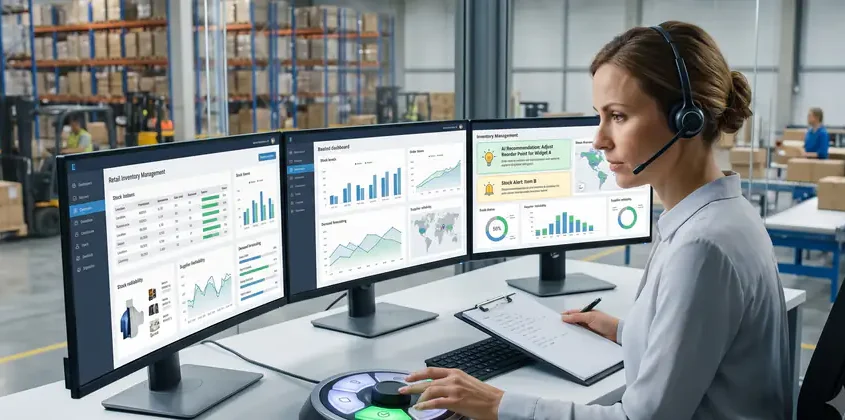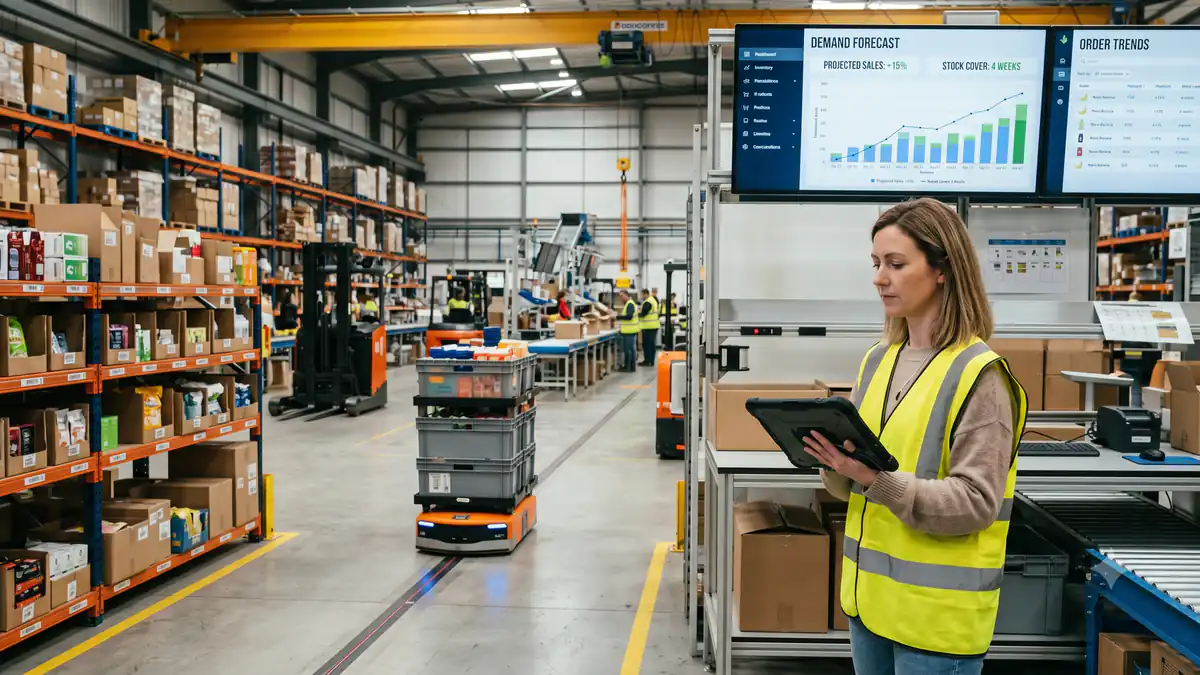
Predicting customer demand can feel like chasing a moving target, especially when your sales are split across multiple channels, seasonal shifts, and flash promotions. If you are still relying on manual spreadsheets to plan your stock, you have likely dealt with the twin headaches of excess stock and costly lost sales.
Automated inventory forecasting solves these issues by leveraging specialized software that uses historical sales data and other data points to predict future stock needs with consistent accuracy. This article explains how these systems work, why they are vital for your business operations, and how automated inventory forecasting helps you make confident, data-driven decisions.
Key Takeaways
- Automated inventory forecasting predicts future stock needs by analyzing past sales trends, current inventory levels, and supplier lead times.
- The primary goal is to help your team manage inventory effectively and make more informed replenishment and stock allocation decisions to protect cash flow.
- Reliable forecasts depend on accurate data and centralized inventory data pulled from all sales channels, warehouses, and open purchase orders.
- Switching to [Automation] reduces unnecessary inventory purchases and helps you avoid the high costs of excess stock or stockouts.
- Brightpearl connects your inventory planning directly with fulfillment, reporting, and broader retail operations for a unified business view.
What Is Automated Inventory Forecasting?
Automated inventory forecasting is the process of using AI-powered technology to analyze sales history, current stock levels, and demand patterns to accurately predict future demand. Unlike manual methods that rely on static reports, these automated inventory systems update consistently as new real-time data becomes available. This ensures that your replenishment logic stays aligned with actual sales data rather than relying on outdated assumptions.
The true value of an inventory forecasting tool is not simply in predicting the future, but in facilitating smarter purchasing and stock planning. For e-commerce and retail businesses selling across multiple locations or physical stores, automated inventory forecasting provides a level of precision that manual planning cannot match. By centralizing your efforts, you gain a clearer path to maintaining the right stock levels at the right time through effective inventory management.
Why Automated Inventory Forecasting Matters for Retailers
In modern retail, customer demand is increasingly difficult to predict across diverse sales touchpoints. Whether you are selling on your own website, through global marketplaces, or in physical locations, the complexity of consumer behavior and changing market trends make manual inventory tracking a liability. Customers expect products to be available immediately, and failing to meet customer demand can lead to lost sales or diminished brand loyalty.
Your inventory decisions also directly affect your business cash flow and inventory turnover. Since stock is typically one of your largest investments, poor forecasting can tie up capital in slow-moving items, preventing you from investing in growth. On top of that, supplier timelines have become more complex, requiring you to account for fluctuating lead times and potential supply chain disruptions.
Manual planning does not scale easily enough to address these compounding issues. As your product catalog grows and you add more warehouses, the effort required to interpret scattered reports becomes overwhelming. Automated inventory management provides your operations team with clear, actionable insights to predict future sales, allowing them to focus on strategy rather than data entry. This agility ensures you can maintain the inventory management processes that keep your business competitive.
What Data Does Automated Inventory Forecasting Use?
An accurate inventory forecast depends on more than just high-level sales totals. To provide a truly useful recommendation, automated inventory management systems synchronize multiple streams of information from across your business. These platforms typically analyze the following data points to ensure your stock levels remain aligned with actual customer demand:
- Historical sales data: Analyzing historical sales data provides a baseline for identifying patterns and trends over time.
- Current inventory levels: Accurate stock-on-hand data prevents the system from recommending unnecessary or insufficient orders.
- Supplier lead times: Understanding how long it takes for a shipment to arrive is essential for timing your replenishment and managing safety stock.
- Seasonality and promotions: The system factors in holidays, peak sales periods, and planned marketing campaigns that might spike future demand.
- Channel and location data: This ensures you have the right stock in the right place, whether it is a regional warehouse or a brick-and-mortar store.
- Product performance: Data on sales velocity helps distinguish between fast-moving essentials and slow-moving variants.
- Inbound stock data: Forecasts must account for purchase orders that are already in transit to avoid unnecessary inventory purchases.
How Automated Inventory Forecasting Works
Building a high-performing forecasting engine requires a shift in how your data informs both your team and your inventory management software. Instead of manually chasing updates, automated inventory forecasting processes let your sales signals drive your procurement strategy. The following steps outline how this automated cycle builds a more resilient, responsive supply chain for your brand.
1. Collect Inventory and Sales Data
The process begins by centralizing information from your sales channels, warehouses, and supplier records. The quality of your forecast depends heavily on the accuracy and completeness of this underlying inventory data. By pulling real-time information from multiple sales channels and sources, the forecasting tool ensures that every calculation is based on current reality.
2. Analyze Demand Patterns
Once the data is collected, the system identifies recurring patterns such as seasonal demand, growth trends, and sales velocity. Most advanced tools utilize a mix of qualitative and quantitative forecasting to separate normal baseline demand from unusual “one-off” events. By recognizing these nuances, you can avoid overreacting to temporary spikes and help your system forecast inventory accurately.
3. Factor in Lead Times and Replenishment Needs
A strong forecasting system accounts for the logistics of getting products to your shelves. The system incorporates supplier lead times and calculates the economic order quantity (EOQ) alongside your chosen safety stock levels. This integration helps your team understand not just what to buy, but also exactly when to place orders to manage inventory effectively.
4. Generate Forecast Outputs and Purchasing Recommendations
The final step is the automated generation of actionable recommendations, including suggested order quantities and replenishment timing. These forecasting models often support broader business processes, such as open-to-buy planning and purchasing budget management. By automatically providing these outputs, the system eliminates the need for manual calculations, significantly optimizing inventory management efforts.
Key Benefits of Automated Inventory Forecasting
Shifting to an automated forecasting model does more than just replace manual calculations; it fundamentally reshapes your operational efficiency. By aligning your stock levels with real-time market behavior, you unlock a range of strategic advantages that help your retail brand stay lean, responsive, and profitable.
More Accurate Demand Planning
Automated tools allow your team to decide how much inventory to order based on accurate demand forecasting rather than guesswork. This precision is especially valuable when businesses manage inventory and demand across different locations, ensuring your planning remains objective and reliable.
Better Purchasing Decisions
A data-driven forecast guides you on what to order and when to order it. This reduces purchasing errors and provides you with the confidence needed for long-term supplier planning, ensuring you never commit capital to the wrong products.
Lower Carrying Costs and Cost Savings
Overstocked inventory increases your storage fees and risks becoming “dead stock.” Automated forecasting helps you keep your inventory levels closely aligned with actual demand, freeing up working capital and resulting in significant cost savings.
Stronger Multi-Channel Inventory Control
If you sell across e-commerce sites, wholesale, and marketplaces, you need a unified view of your stock needs. Automation allows you to plan inventory across your entire business rather than treating each channel in isolation.
More Efficient Operations
By reducing the manual labor associated with forecasting, you free up your purchasing, finance, and operations teams to focus on high-value tasks. Faster decisions and fewer errors lead to better alignment across your entire organization and smoother business operations.
Common Challenges With Automated Inventory Forecasting
Integrating automation into your supply chain can significantly accelerate your growth, but the transition isn’t always straightforward. Understanding potential implementation hurdles helps your team prepare effectively and ensure your new forecasting engine remains a reliable source of truth.
Poor Data Quality
Inaccurate historical data can weaken the reliability of your forecasts. If your past sales data or stock records are messy, the system’s recommendations will be equally flawed, making it difficult to generate accurate forecasts.
Disconnected Systems
Forecasting is significantly harder when your e-commerce platform, warehouse, and accounting software do not share real-time information. Successful automation requires a centralized platform that is fully integrated with your existing systems.
Unpredictable Demand Shifts
Sudden market trends, supply chain disruptions, or viral product moments can still challenge even the best forecasting models. Your team should be prepared to adjust forecasts based on external market research and unusual product behavior.
Overreliance on Automation
While automated inventory forecasting software is highly capable, human oversight remains essential. Your team provides the strategic context and brand priorities that an algorithm might miss, especially regarding long-term business goals and market shifts.
Inconsistent Supplier Lead Times
An accurate inventory forecast can still be undermined if your suppliers are unreliable. Forecasting tools work best when you have a transparent and consistent relationship with your supply chain partners.
Lack of Process Alignment
Automation delivers its full value only when your purchasing, warehouse, and finance teams use the same planning assumptions and data sources.
Best Practices for Automated Inventory Forecasting
Adopting automated inventory forecasting is a significant step forward, but its success depends on how well you integrate these tools into your daily operations. Following these strategic best practices will help you maximize the forecasting accuracy of your models and ensure your inventory remains a catalyst for growth rather than a burden on your cash flow.
1. Start With Clean, Centralized Data
The foundation of any forecast is accurate data. Focus on reducing duplicate records and ensuring your systems are pulling from a single, verified source of truth across all sales channels.
2. Review Forecasts Regularly
Market conditions change, and your forecasts should too. Compare your predicted demand against actual sales performance regularly to refine your planning logic and accurately forecast demand over time.
3. Account for Seasonality and Promotions
Always adjust your settings for holidays, peak seasons, or planned marketing campaigns. These events can distort your baseline demand if you do not factor in seasonal demand explicitly.
4. Build in Supplier and Fulfillment Realities
Ensure your forecast accounts for supplier reliability and your current warehouse capacity. A forecast is only useful if it reflects what your business can realistically source and fulfill within your average inventory targets.
5. Use Automation Alongside Human Judgment
Think of automation as a highly skilled assistant. Let the software handle the complex math and trend forecasting, while your team focuses on interpreting market shifts and setting brand strategy.
6. Connect Forecasts to Purchasing and Fulfillment Workflows
Your forecasts should be integrated with the systems you use to place purchase orders and manage fulfillment. Using a unified platform helps your team act on insights faster and eliminates manual handoffs.
Automated Inventory Forecasting Use Cases
While the technical side of forecasting is essential, its true value is best seen through its practical application in your daily business operations. You can better understand how automated inventory forecasting methods help you navigate volatility and protect your margins across every sales channel by examining common retail scenarios.
Replenishing Fast-Moving Products
Automation identifies exactly when your “hero” products need to be reordered, helping you accurately predict future demand before you run out.
Planning for Seasonal Demand
Whether it is holiday shopping or a summer collection, automated forecasting helps you build up stock in advance without being left with excess inventory once the season ends.
Managing New Product Launches
While new products lack sales history, automation can use comparable product data and early sales signals to help you predict future product demand more accurately.
Reducing Excess Stock
Automated inventory forecasting highlights items that are moving more slowly than expected, allowing your merchandising team to plan promotions or adjust future orders before the stock becomes a financial burden.
Coordinating Multi-Channel Inventory
You can use automated inventory forecasting to balance stock across e-commerce warehouses and physical store locations, ensuring that your future inventory is always where the customers are.
Planning Purchasing Budgets
By understanding future buying needs months in advance, you can create more disciplined purchasing budgets and improve your overall cash flow planning using a proper EOQ approach.
How Brightpearl Supports Automated Inventory Forecasting
Brightpearl helps merchants connect their sales, inventory, and purchasing in a single unified platform. By integrating with your broader retail tech stack, Brightpearl streamlines demand planning and ensures that your forecasts are always based on the most current information.
- ERP Compatibility and Integration: As a centralized hub, Brightpearl offers seamless integration with your existing systems, pulling real-time data from sales, purchasing, and supply chain operations to ensure consistent data across the business.
- Real-Time Data Syncing: Automatic syncing with sales, supplier, and inventory data ensures your forecasts reflect the most up-to-date demand signals, without manual exports.
- Customizable Forecasting Models: Adapt your forecasting methods for seasonal products, promotions, or new launches to maintain accuracy through every phase of the product lifecycle.
- Strategic Scenario Planning: Leverage tools to test “what-if” situations, such as supplier delays or sudden market shifts, allowing your team to gain agility and react with confidence.
- Ease of Use and Visual Reporting: Interactive dashboards and visual reporting tools make it easy for operations teams to interpret complex data and support better decision-making across the entire supply chain.
- Variant-Level Planning: Support granular forecasting for specific product variants such as size, color, or pattern to meet specific customer preferences.
- Automated Replenishment Workflows: Connect forecasting insights directly to purchase orders and supplier planning to reduce manual work and speed up your procurement cycle.
Turn Inventory Forecasts Into Better Retail Decisions
Automated inventory forecasting helps you make accurate, data-driven decisions about what to stock and when to reorder. By moving away from manual spreadsheets, you protect your cash flow and ensure that your customers always find what they are looking for.
Forecasting is at its most powerful when it is connected to the rest of your business. Brightpearl provides the operational foundation needed to link your demand planning with real-time sales and fulfillment data. Book a demo with Brightpearl today to see how a connected platform can support better forecasting, purchasing, and stock control for your brand.
Frequently Asked Questions
What Is the Difference Between Inventory Forecasting and Demand Forecasting?
Demand forecasting focuses on predicting customer interest, while inventory forecasting applies those insights to specific stock decisions. While closely connected, inventory forecasting is more directly concerned with purchasing, replenishment timing, and warehouse availability.
Can Automated Inventory Forecasting Prevent Stockouts Completely?
While it significantly reduces the risk, no system can eliminate stockouts entirely. Unexpected supply chain disruptions, extreme demand spikes, or supplier data errors can still affect your product availability.
What Makes Automated Inventory Forecasting More Accurate?
Its accuracy stems from clean data, real-time integration across all sales channels, and the ability to process complex variables like seasonality and lead times much faster than any manual spreadsheet could. By choosing the right inventory forecasting method, you ensure your business stays ahead of market trends.