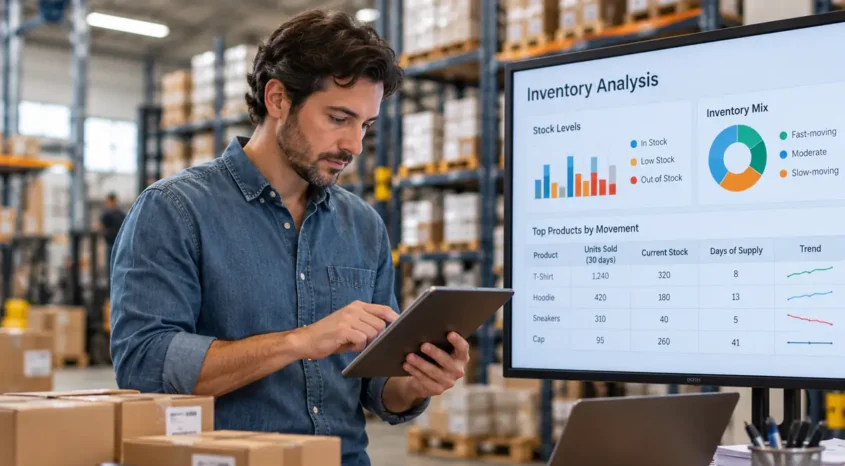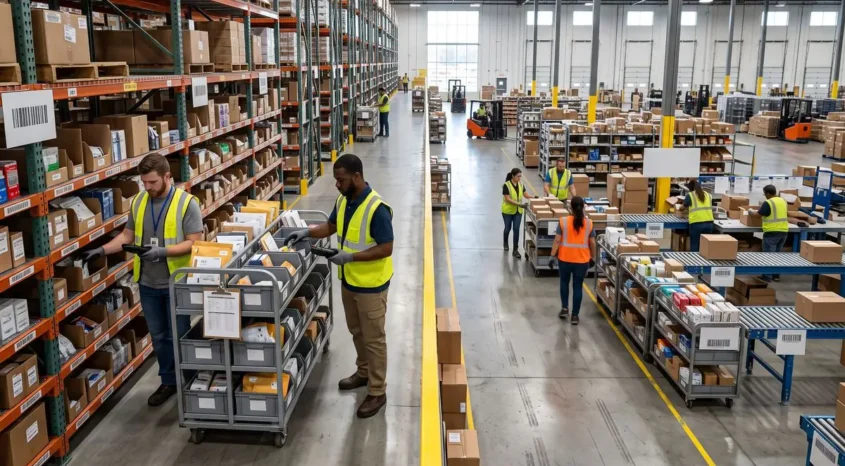
Retailers know how challenging it is to balance expanding sales channels, tighter margins, and rising customer expectations. To protect your profitability and gain a true competitive advantage, you can utilize AI inventory optimization. This modern approach uses artificial intelligence, connected retail data, and automation to streamline your entire supply chain, from replenishment to forecasting and stock control. Let’s look at what this technology is, why traditional inventory management fails, and how these modern AI tools can help you drive sustainable growth.
Key Takeaways
- AI inventory optimization helps you make smarter forecasting, replenishment, purchasing, and stock control decisions.
- Older planning methods often struggle to keep pace with changing customer demand, multi-channel sales, and supply chain volatility.
- Achieving efficient inventory management depends on accurate data, connected retail systems, and workflows that turn insights into action.
- Brightpearl helps growing retailers use smarter inventory insights and AI-driven inventory management to improve stock availability and reduce costly imbalances.
What Is AI Inventory Optimization?
AI inventory optimization is the process of using artificial intelligence, machine learning, and advanced predictive analytics to forecast future demand, plan replenishment, and maintain optimal inventory levels. By analyzing massive amounts of historical sales data, real-time sales signals, and external factors like market trends, this technology helps you make highly informed purchasing decisions.
But how does it differ from standard AI inventory management? While they sound similar, AI-driven inventory management is the broad category for using AI across all inventory processes—such as tracking and warehouse operations. Inventory optimization, on the other hand, focuses on finding the sweet spot: ensuring you have enough stock to meet customer demand while minimizing the carrying costs of excess stock.
While basic inventory management software simply tracks what you currently have in stock, optimization helps you anticipate what you will need, where it should go, and when you should take action. Mastering this balance directly improves your working capital, inventory turnover, and long-term business growth.
Why Traditional Inventory Planning Methods No Longer Work
Traditional inventory management was built for a much simpler retail environment. If you are still relying on static spreadsheets and manual forecasting, you are likely facing recurring bottlenecks, demand fluctuations, and missed opportunities.
Here is why older methods struggle to keep pace with modern supply chains:
- Demand changes too quickly: Simple historical averages cannot keep up with demand volatility, sudden shifts in customer behavior, or rapid market trends.
- Multi-channel complexity: Selling across e-commerce platforms, marketplaces, physical stores, and social commerce adds massive inventory complexity.
- Manual processes slow you down: Disconnected spreadsheets prevent operations teams from reacting quickly to sudden demand spikes or stockouts.
- Static reorder points create risk: Fixed rules do not adjust to changes in sales velocity or supplier lead times, leading to either excess inventory or empty shelves.
- Siloed data limits visibility: Without connected inventory data, you cannot build a unified view of actual business needs.
- Growth breaks manual workflows: What worked when you had one shop or site will break down as your Stock Keeping Unit (SKU) count, order volume, and sales channels expand.
- Reactive decisions hurt margins: Delayed orders force you to pay higher shipping costs, accept lower margins through markdowns, and incur the costs of holding dead stock.
What Are the Benefits of AI Inventory Optimization?
Implementing intelligent systems to optimize inventory levels does more than just clean up your spreadsheets; it provides a variety of strategic advantages that directly protect your bottom line and improve overall operational efficiency. When you shift from manual tracking to an automated, predictive approach, you transition your operations team from playing catch-up to strategically steering your growth.
Better Demand Forecasting
Using predictive demand forecasting allows your business to identify complex demand patterns and generate highly accurate demand forecasts. AI models analyze past performance and external demand trends, helping you avoid the guesswork that typically leads to purchasing mistakes.
Fewer Stockouts
Maintaining service levels is critical for customer retention. Optimized replenishment planning ensures that your best-selling items remain in stock across all your sales channels, helping you consistently meet customer demand, adapt to changing customer behavior, and maintain steady cash flow.
Less Excess Inventory
Carrying excess inventory ties up working capital and increases warehouse carrying costs. Intelligent tools help you align purchasing with actual customer demand, protecting your inventory value and reducing carrying costs, slow-moving stock, and storage fees.
Stronger Replenishment Decisions
Smarter reorder points and recommendations help you time your purchase orders perfectly. These tools calculate dynamic safety stock levels to optimize safety stock and account for supplier lead times, ensuring you order the exact quantity of products needed to keep operations moving.
Improved Operational Efficiency
Automated inventory planning reduces the hours your operations team spends on manual calculations. By using retail automation, your staff can step away from repetitive spreadsheet work and focus on strategic tasks such as managing supplier performance.
Greater Visibility Across Channels and Locations
Connecting your sales and fulfillment data gives you real-time visibility into how your inventory is performing across different channels. You can easily see where stock is needed most, enabling efficient inventory allocation and allowing you to optimize stock levels.
How AI Inventory Optimization Works
Rather than treating inventory planning as a static, monthly task, optimized planning works as a continuous cycle. The system constantly learns and improves as new sales, supplier, and operational data becomes available.
1. Connect Sales, Inventory, and Operational Data
The process begins by bringing together information from your sales channels, supplier workflows, and warehouse management system. This central connection establishes a single source of truth, often integrating with your enterprise resource planning (ERP) software.
2. Analyze Demand Patterns and Product Performance
The artificial intelligence analyzes your historical sales data, seasonal trends, and promotional periods. It identifies how quickly different items sell, how sales vary by location, and how customer behavior changes throughout the year.
3. Forecast Future Inventory Needs
Using machine learning algorithms, the system generates accurate demand forecasts. These forecasts project your future demand at the individual SKU level, factoring in lead times and potential market fluctuations.
4. Recommend Replenishment and Purchasing Actions
The software translates these forecasts into practical recommendations. It suggests optimal reorder points, purchase order quantities, and stock allocation plans to ensure you meet customer demand without overbuying.
5. Turn Recommendations into Workflows
Data only provides value when you can act on it. The system connects these insights directly to your daily operations, allowing your team to instantly generate purchase orders, adjust safety stock levels, and coordinate with inventory tracking systems.
6. Monitor Performance and Adjust Continuously
The system continuously compares actual sales against its generated forecasts. This continuous learning loop allows the AI to refine its calculations, making your future inventory plans increasingly accurate over time.
Common Challenges of AI Inventory Optimization
While the advantages of intelligent planning are numerous, implementing these tools can introduce specific hurdles that growing retailers must prepare to manage.
Poor Data Quality
AI systems rely on clean, consistent inputs to work effectively. If your historical data, stock counts, or supplier lead times contain errors, the generated recommendations will likely be inaccurate.
Disconnected Retail Systems
Many retailers utilize siloed platforms. Disconnected shipping and fulfillment software and warehouse tools make it extremely difficult to compile the cohesive data required for real-time visibility.
Overreliance on Automation
While automated tools are highly efficient, they should support your team rather than replace human judgment. Successful planning still requires your team’s knowledge of supplier relationships, local market nuances, and strategic business goals.
Forecasting New or Unpredictable Products
Predicting demand for products with limited historical sales data, such as brand-new arrivals or unique seasonal items, remains difficult. These situations require human planners to provide additional context, such as using sales patterns from similar product categories.
Getting Teams to Trust and Use AI Recommendations
Employees are often hesitant to adopt automated recommendations if they do not understand how the system calculated them. Building confidence requires clear communication about how the software supports, rather than replaces, daily workflows.
Difficulty Turning Insight into Action
Having great data is not enough if your team still has to manually copy suggestions into purchase orders and update multiple sales channels. Your AI inventory management software must connect directly to your operations to deliver measurable efficiency gains.
Best Practices for Using AI Inventory Optimization Effectively
To get the best possible return on your investment in intelligent planning, you need more than just great software—you need the right operational playbook. Implementing these key strategic practices ensures your systems run on clean data, your team embraces automated insights, and your business remains agile enough to adapt to demand variability.
Start with Clean, Connected Inventory Data
Before turning on automated systems, ensure your inventory data is clean, accurate, and fully up to date. Standardizing your SKU data and cleaning up your historical sales records will give your optimization tools a reliable foundation.
Use AI to Support Practical Retail Decisions
Focus on using the technology to solve real, everyday issues. Use the insights to identify which products need faster replenishment, which items are at risk of stockouts, and where you have excess capital tied up in slow-moving stock.
Review Forecasts and Recommendations Regularly
Make reviewing your automated forecasts a regular part of your team’s routine. Comparing the system’s recommendations against your actual sales performance helps you catch anomalies and adjust your parameters as your business grows.
Account for Promotions, Seasonality, and Supplier Variability
Always feed your marketing calendar and supplier changes into your planning system. Informing the system about upcoming sales campaigns, seasonal demand, or changing supplier lead times prevents unexpected stock imbalances.
Build Team Confidence in AI-Driven Planning
Involve your purchasing and operations teams early in the transition. Show them how automated forecasting reduces their administrative workload, and maintain a clear process for human review to adjust safety stock levels.
Choose Tools that Connect Insight with Execution
Avoid tools that only show data without helping you act on it. Look for inventory management solutions that seamlessly convert replenishment insights into real purchase orders and automatically update across all your channels.
AI Inventory Optimization Use Cases for Growing Retailers
Theory is one thing, but how does AI inventory optimization actually perform in the real world? Transitioning to intelligent planning is a practical way to solve the day-to-day inventory headaches that drain your time and capital. From best-seller stockouts to slow-moving cash traps, let’s look at how growing brands use these systems to solve real-world challenges and generate significant cost savings.
Replenishing Best-Selling Products
Instead of manually tracking your fast-moving items, AI tools monitor sales velocity in real time. The system automatically alerts you when high-demand items need to be reordered, protecting your sales margins.
Reducing Slow-Moving Inventory
The technology helps you identify which items are failing to meet their sales projections early in their lifecycle. This allows you to plan timely promotions, bundle products, or adjust future purchasing orders before excess stock builds up.
Planning for Seasonal Demand
Holiday spikes and seasonal changes can make or break a retailer’s year. Intelligent forecasting analyzes past seasonal cycles to ensure you order enough inventory to maximize peak-season revenue without getting stuck with dead stock afterward.
Managing Inventory Across Multiple Channels
If you sell across an online store, online marketplaces, and physical retail locations, keeping stock balanced is difficult. AI models look at location-specific demand to recommend where your inventory should be stored to optimize fulfillment.
Forecasting Demand for New Products and Variants
When launching new sizes, colors, or product variants, you can use similar-item histories to estimate initial demand. This approach helps you avoid over-purchasing during a product launch while still capturing early customer interest.
How Brightpearl Connects Inventory Planning with Retail Operations
To truly improve your efficiency, your planning insights must connect directly with your daily workflows. Brightpearl provides a unified retail operating system designed to bridge the gap between planning and execution by connecting your sales, purchasing, and fulfillment channels into a single, cohesive system using real-time data.
Brightpearl helps growing retailers move away from disconnected tools and manual processes through the following capabilities:
- Centralized Inventory Visibility: Gain a complete view of your stock levels across all sales channels, warehouses, and brick-and-mortar locations in one platform.
- Integrated Inventory Planner: Utilize dedicated tools that support highly accurate demand forecasting, replenishment planning, and data-driven purchasing recommendations.
- Smarter Stock Decisions: Access demand and sales insights that help your team identify trends and make better decisions regarding stock allocation.
- Variant-Level Planning: Simplify the management of complex product lines with different sizes, colors, or patterns using specialized planning workflows.
- New Product Forecasting: Use historical data from similar product categories or related sales patterns to plan for successful new product launches.
- The Automation Engine: Turn inventory insights into immediate action by automating purchase orders and fulfillment tasks, reducing the need for manual data entry.
- Full Operational Integration: Sync your inventory plans with your broader retail business, including warehouse management, retail accounting software, and point-of-sale systems.
By using these integrated tools, your business can stop managing inventory in isolation and start connecting your long-term planning with everyday operational execution.
Turning AI Inventory Insights Into Better Retail Growth
Embracing AI inventory optimization provides your retail business with a reliable roadmap to manage physical resources efficiently. This approach frees up valuable working capital, improves customer satisfaction, and keeps your operational costs low as you scale.
Succeeding with automated planning depends on combining accurate data, smart forecasting, and connected inventory management systems that let your team act on insights instantly. Brightpearl provides centralized visibility, automated workflows, and smart planning tools to streamline your operations and scale your business with confidence.
If you are ready to eliminate manual spreadsheets and connect your inventory planning with everyday operational execution, book a demo with Brightpearl today.
Frequently Asked Questions
What is AI inventory optimization?
AI inventory optimization uses artificial intelligence, automation, and connected sales data to help retailers improve forecasting, replenishment, purchasing, and stock control. It helps businesses balance product availability with minimal carrying costs.
How is AI used in inventory management?
AI is used to analyze real-time sales velocity, seasonal trends, and supplier lead times. It then generates accurate demand forecasts, highlights potential stock issues, and recommends exact reorder quantities to keep operations running smoothly.
What data is needed for AI inventory optimization?
AI inventory optimization performs best when connected to accurate, real-time data. This includes your historical sales records, current stock levels, supplier lead times, product details, and active promotion calendars.
Is AI going to replace supply chain jobs?
No, AI is designed to support supply chain teams rather than replace them. It automates repetitive data analysis and generates recommendations, freeing up human professionals to focus on supplier relationships, high-level strategy, and exception handling.