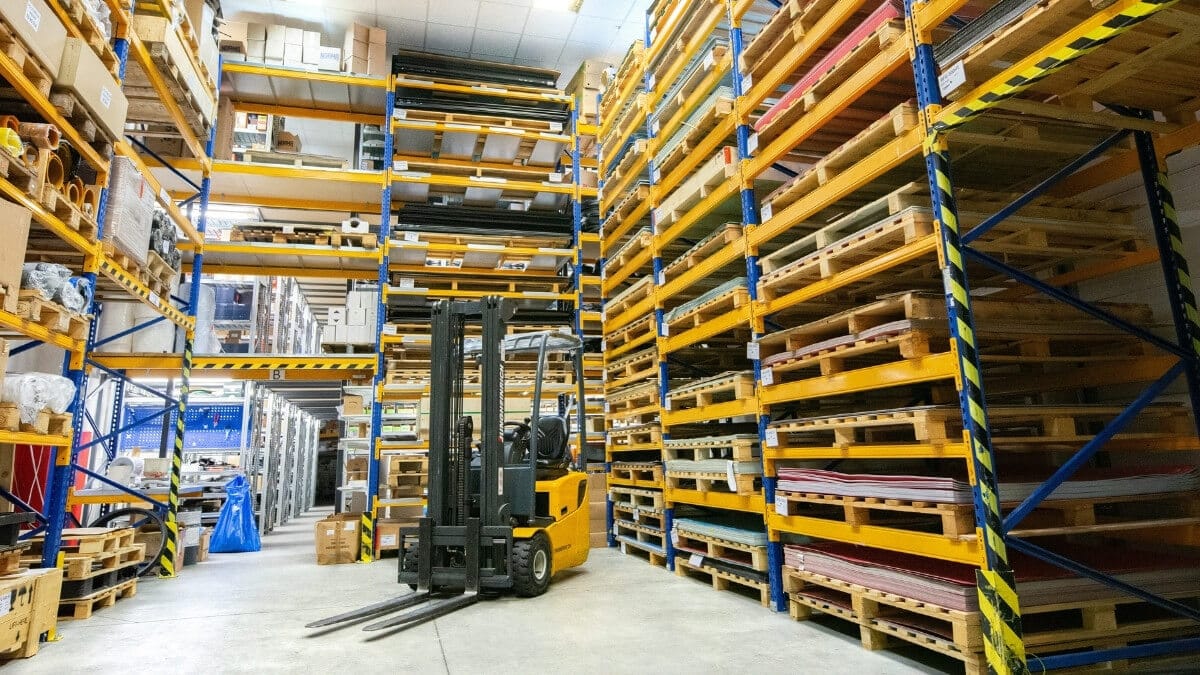
Retail and e-commerce operations have reached a point where traditional manual tracking often falls short. Many businesses now sell across multiple channels, manage various warehouses, and coordinate with several fulfillment locations simultaneously. This growth makes managing inventory and warehouse operations increasingly challenging, often leading to confusion about which supply chain processes are responsible for specific tasks.
While inventory management and warehouse management are frequently used interchangeably, they refer to different operational functions within supply chain management. Distinguishing between the two is important because confusing them often leads to operational inefficiencies, poor software investment decisions, and limited visibility as your business scales. Understanding these differences helps you build a more resilient foundation for managing inventory and growth.
Key Takeaways
- Inventory management tracks stock levels, availability, and financial value across all your sales channels and storage locations.
- Warehouse management is responsible for the physical handling of goods inside a facility, including storage, picking, packing, and shipping.
- Effective inventory management solutions ensure you know what stock you have on hand and where it is currently located.
- Effective warehouse management systems ensure products move through your warehouse processes with maximum efficiency and accuracy.
- Integrating inventory management and warehouse management systems often provides the accurate inventory data needed for successful retail operations.
What Is Inventory Management?
Inventory management encompasses all the processes a business uses to track, control, and maintain optimal stock levels across its entire operation. It provides the necessary visibility into inventory levels, movements, and total value. This oversight allows you to meet customer demand consistently without the risks associated with excess inventory or running out of popular products.
For multichannel retailers and e-commerce brands, maintaining an effective inventory management strategy is critical for accurate product availability. Without a clear view of your inventory levels, the risk of overselling increases, which can lead to negative customer experiences and lost revenue. However, by consistently and accurately tracking inventory levels, you ensure that the data reflected on your website matches the actual stock sitting on your shelves, protecting your cash flow and reducing storage costs.
Core Responsibilities of Inventory Management
Maintaining accurate records and planning for future stock requirements typically involves several recurring inventory management processes. These tasks focus on the high-level status of your products rather than the specific physical steps taken to move them.
- Tracking inventory levels across multiple warehouse locations and digital sales channels.
- Monitoring stock levels and real-time product availability to prevent stockouts.
- Managing purchase orders and coordinating incoming raw materials or finished goods from suppliers.
- Using inventory forecasting and replenishment needs based on sales history.
- Valuing inventory for accounting purposes and end-of-year financial reporting.
What an Inventory Management System (IMS) Does
An inventory management system (IMS) is software designed to automate and centralize inventory tracking. Inventory management software replaces manual spreadsheets or disconnected tools with real-time visibility across all your channels and locations. This centralized approach to inventory control systems reduces human error and provides a “single source of truth” for your stock data.
Typical capabilities of inventory systems include:
- Real-time inventory tracking across global supply chains.
- Automatic multi-channel inventory synchronization to prevent overselling.
- Data-driven demand forecasting and automated replenishment planning for optimal stock levels.
- Comprehensive inventory reporting and performance analytics.
- Seamless integration with e-commerce platforms, marketplaces, and existing systems.
What Is Warehouse Management?
Warehouse management handles the physical processes that occur inside a warehouse facility. It emphasizes the movement of goods through receiving, storage, picking, packing, and shipping processes. While inventory management refers to “what stock do we have?”, warehouse management focuses on “how does that stock move through the warehouse?”
Warehouse management is concerned with improving warehouse operations by optimizing the physical space and the labor required for order fulfillment. Effective warehouse management ensures that space utilization is handled effectively and that your warehouse workers can find, pick, and pack items with minimal wasted movement. As order volumes grow, these internal warehouse operations often become the deciding factor in how quickly you can get products to your customers.
Core Responsibilities of Warehouse Management
Warehouse management ensures that goods move through your facility and reach the customer as quickly as possible. These responsibilities are highly tactical and execution-oriented, aiming for efficient warehouse operations.
- Receiving and inspecting incoming shipments to verify inventory accuracy against purchase orders.
- Assigning optimal warehouse storage locations based on product velocity and size.
- Managing bin and location tracking to ensure every item is easy to find.
- Coordinating picking tasks for outgoing customer orders.
- Packing shipments securely and generating the necessary documentation.
- Processing returns and restocking items back into the correct inventory storage areas.
What a Warehouse Management System (WMS) Does
A warehouse management system (WMS) is software built to manage and optimize daily warehouse operations. It helps organize warehouse workflows, improve fulfillment accuracy, and reduce the time it takes to process an order from start to finish. A WMS typically uses tools like barcode scanning and radio frequency identification (RFID) to provide granular updates on item movement.
Typical warehouse management software capabilities include:
- Granular bin and location management to maximize space utilization.
- Optimized pick, pack, and ship workflows for improved speed.
- Barcode scanning and digital automation support to reduce manual errors.
- Labor and task management to monitor team productivity.
- Warehouse performance reporting to identify bottlenecks in the fulfillment process.
Inventory Management vs. Warehouse Management: Key Similarities
Although these two functions focus on different parts of the supply chain, they share several goals and operational dependencies. Both rely on accurate inventory data to function effectively, and a failure in one area often creates problems in the other. For example, if your inventory records are incorrect, your warehouse team may spend hours searching for items that aren’t actually in stock.
Key similarities include:
- Reliance on accurate data: Both functions require precise information to prevent fulfillment delays.
- Fulfillment support: Both are essential for ensuring that orders reach customers on time.
- Operational visibility: Both provide insights that help managers make better decisions about labor and stock.
- Supply chain optimization: Both are fundamental pillars for retailers managing inventory and warehouse systems.
Because of these overlaps, many professionals use the terms interchangeably, but recognizing the distinct focus of each is vital for scaling your supply chain operations.
Inventory Management vs. Warehouse Management: Key Differences
Inventory management and warehouse management focus on different operational priorities and serve different parts of your organization. While they overlap in the goal of improved customer satisfaction, their daily execution looks quite different.
Key comparison points:
- Operational focus: Inventory management tracks stock levels and availability across the business, while warehouse management manages the physical workflows within a facility.
- Scope: Inventory management usually spans the entire business and all locations, whereas warehouse management focuses on individual warehouse facilities.
- Decision-making: Inventory management informs strategic decisions like purchasing, accurate demand forecasting, and replenishment.
- Execution: Warehouse management focuses on the tactical side of things, such as picking accuracy, space utilization, and fulfillment speed.
- Primary users: Inventory planners and finance teams rely on inventory management tools, while warehouse managers and fulfillment teams use warehouse systems.
How Inventory Management and Warehouse Management Work Together
Inventory and warehouse management are tightly connected functions that work best when they share information in real time. Strong inventory management practices provide high-level data about stock levels and market demand patterns, while warehouse management streamlines complex operations and ensures products move efficiently through the fulfillment process. When these two areas are synchronized, the entire supply chain becomes more predictable.
When integrated, your business typically benefits from:
- Accurate inventory visibility across all physical locations and digital sales channels.
- Faster order fulfillment due to streamlined picking and packing paths.
- Better replenishment decisions based on both sales trends and physical storage capacity.
- Reduced operational errors, such as shipping the wrong item or overselling a product.
Disconnected systems often lead to stock discrepancies, where the computer thinks an item is in stock, but the warehouse team cannot find it. This lack of visibility typically results in slower fulfillment and fails to meet customer expectations.
IMS vs. WMS: Which Does Your Business Need?
The choice between IMS and WMS solutions typically depends on your operational complexity and current growth stage. Many smaller businesses start with basic inventory tracking, while larger operations with high volumes often find that they require the specialized execution features of a WMS.
Businesses that typically benefit from an inventory management system:
- You sell across multiple sales channels like Shopify, Amazon, and eBay.
- You require real-time inventory visibility to prevent overselling.
- You manage complex purchasing and replenishment across multiple suppliers.
- You need robust inventory reporting and forecasting to plan for future growth. [Inventory Planning Page]
Businesses that typically benefit from a warehouse management system:
- You operate one or more large warehouses with thousands of SKUs.
- You process high daily order volumes that require speed and precision.
- You require structured pick and pack workflows to manage a large fulfillment team.
- You may work with third-party logistics providers and need to maintain accurate data.
In many cases, growing retailers ultimately need both capabilities to maintain operational efficiency and cost savings.
How Brightpearl Supports Inventory and Warehouse Management
Retail operations naturally become more complex as you grow across more channels and manage higher order volumes. Disconnected tools often create data silos that slow down your team and lead to costly mistakes. Brightpearl serves as a retail operating system that connects inventory management, order management, and warehouse workflows in one centralized platform.
By unifying these functions, Brightpearl provides the real-time visibility and automation needed to scale without adding significant manual labor. This approach ensures that your office team and your warehouse team are always looking at the same accurate data.
Key capabilities include:
- Real-time inventory visibility across all your channels and warehouses.
- Automated order routing to ensure orders are fulfilled from the best location.
- Structured warehouse operations, including guided picking and packing.
- Powerful automation to reduce repetitive manual tasks and human error.
- In-depth operational reporting and analytics for better decision-making.
Inventory Management vs. Warehouse Management: Choosing the Right Approach for Retail Operations
Inventory management focuses on the high-level visibility and planning of your stock, while warehouse management focuses on the physical execution of orders within your facility. Both are essential for a healthy supply chain, but they serve different purposes. As your retail business grows, the gap between these two functions can become a source of friction if they are not properly aligned.
Growing retailers typically find the most success when they have both capabilities working together seamlessly. Platforms that unify inventory visibility, warehouse workflows, and fulfillment processes help you reduce operational complexity. By choosing a solution that bridges the gap between the office and the warehouse, you can focus on scaling your business and delivering improved customer satisfaction.
Book a demo today to discover how Brightpearl can streamline your retail operations.
Frequently Asked Questions
What is the difference between inventory management and warehouse management?
Inventory management tracks the quantity, value, and location of stock across an entire business. Warehouse management focuses on the physical processes within a specific facility, such as receiving, picking, packing, and shipping goods.
Do businesses need both an IMS and a WMS?
Many growing retailers benefit from having both sets of capabilities. While an IMS handles the “big picture” of stock levels and purchasing, a WMS optimizes the physical labor and movement inside the warehouse to ensure fast and accurate fulfillment.
Can an inventory management system replace a warehouse management system?
An IMS can handle basic warehouse tasks for smaller operations, but it typically lacks the granular location tracking and advanced picking workflows found in a dedicated WMS. As complexity increases, businesses usually find that they need a system that offers both inventory and warehouse management features.